- Home
- Services
Curious How You Show Up in ChatGPT?
See where AI search recommends you, and where it recommends a competitor instead.
Driven by Values, Focused on Your Growth
MacRAE’S founder, Hugh Owen, recognized early the rise of AI and digital acceleration. His vision defines MacRAE’S as a future-ready growth partner.
Curious How You Show Up in ChatGPT?
See where AI search recommends you, and where it recommends a competitor instead.
Driven by Values, Focused on Your Growth
MacRAE’S founder, Hugh Owen, recognized early the rise of AI and digital acceleration. His vision defines MacRAE’S as a future-ready growth partner.
Curious How You Show Up in ChatGPT?
See where AI search recommends you, and where it recommends a competitor instead.
Driven by Values, Focused on Your Growth
MacRAE’S founder, Hugh Owen, recognized early the rise of AI and digital acceleration. His vision defines MacRAE’S as a future-ready growth partner.
- AI SEO
Curious How You Show Up in ChatGPT?
See where AI search recommends you, and where it recommends a competitor instead.
Driven by Values, Focused on Your Growth
MacRAE’S founder, Hugh Owen, recognized early the rise of AI and digital acceleration. His vision defines MacRAE’S as a future-ready growth partner.
Curious How You Show Up in ChatGPT?
See where AI search recommends you, and where it recommends a competitor instead.
Driven by Values, Focused on Your Growth
MacRAE’S founder, Hugh Owen, recognized early the rise of AI and digital acceleration. His vision defines MacRAE’S as a future-ready growth partner.
Curious How You Show Up in ChatGPT?
See where AI search recommends you, and where it recommends a competitor instead.
Driven by Values, Focused on Your Growth
MacRAE’S founder, Hugh Owen, recognized early the rise of AI and digital acceleration. His vision defines MacRAE’S as a future-ready growth partner.
- Company


Contact US

Transcript
Maria (00:00)
⁓ Hi everyone and welcome to the MacRAE’S Growth Challenge podcast, Inside with B2B and manufacturing leaders where we uncover their stories, strategies and solutions to overcoming growth challenges in their industries. I’m your host Maria and in each episode we will dive deep with founders, CEOs and industry experts to explore how they scale, innovate and lead in today’s competitive landscape. So let’s get started. Today we have Rob from Wittern Group.
Nice to meet you. How are you today?
Rob (00:30)
Pleasure, nice to meet you. I’m wonderful.
Maria (00:32)
Awesome. So Rob, why don’t you introduce yourself to our audience and tell me a little bit more about your company.
Rob (00:39)
Yeah, yeah. So my name’s Rob Mara. I’m the vice president of sales for the Wittern Group, specifically for our You Select It line of business. We are a 95-year-old family business based out of Des Moines, Iowa. The third generation of the family is nearing retirement. So quite successful, evolved over the years. Company organization started as making
peanut vending machines and over the years just graduated into on top of traditional vending to large industrial accounts, lockers, technology, management companies. So we have a number of lines of business. Company continues to grow and scale from those humble beginnings in Des Moines, Iowa.
Maria (01:22)
That’s awesome. Wow, 95 years. That’s a really long time.
Rob (01:27)
Yeah, yeah, no, for sure. if you, I don’t have statistics on this, right, but you can Google and find out, right, the likelihood of any organization going to the third family generation and staying private and all that is extremely unlikely. Probably the best example out there is the Mars family, which probably now might even be into their fourth or fifth generation, but it’s very unlikely.
We’ve been blessed with great leadership and great family. They treat their people very, very well. So yeah.
Maria (01:57)
Do you think that their relationship with the employees is really the number one reason why they’ve been able to survive so long? Or do you think that there’s also part of it to like adaptation? over the last 95 years, technology and business has changed so much. Is that part of the first most important things for them as a company value is to be adaptable?
Rob (02:18)
For sure. Yeah. I mean, it’s it’s you have to be the industries that we sell our equipment in and provide our services. They’ve all evolved and changed quite a bit, really in the last 10 to 20 years as well. But, you know, I also wouldn’t discount, you know, the people, the culture and how important that is right to maintaining and sustaining a growth business.
Maria (02:41)
Yeah. And if we talk specifically about growth and, you know, getting the product out there and getting more eyeballs on it and making the right connections, how are you guys currently, what are the channels that you guys are currently using to grow the business?
Rob (02:59)
Yeah, I mean, what, you know, we certainly, you know, all the, as we spoke before, you know, marketing, you know, internet, you know, those sorts of campaigns, you know, always trying to draw really inbound awareness, right? About your products for those that don’t know you exist, you know, for existing customers, it’s collaborative planning, it’s innovation, it’s really understanding, you know, where their growth is coming from and
or even collaborate on future products. We do customize stuff for a number of companies. But that all starts with strategic and collaborative planning.
Maria (03:35)
Who are your main customers right now?
Rob (03:37)
Gosh, we’ve got, you know, in the traditional vending space, it’s the large global automated retailers like Canteen, Sodexo, Aramark, as well as a lot of large independents. You know, we sell to Coca-Cola bottlers all over the world. We sell to, you know, non-traditional vending customers. Maybe, you know, it’s PPE or it’s…
you know, into healthcare and other channels. And then we do large industrial clients that, you know, maybe for inventory control, right? Think about, you know, organizations like Fastenal or, or Cintas and, you know, and, you know, building out those channels of business. And then there’s other, there’s technology and backend stuff and support that we do for a lot of,
for lot of vending operators. So it’s quite diverse.
Maria (04:27)
If you think about like the segmentations of your clients, is there a specific area where you guys are trying to grow more in right now?
Rob (04:34)
Yeah, I mean, yes, in a broader perspective, you know, we want to understand, you know, the way I always said there’s kind of three buckets, right? There’s your existing clients, your understanding of, you know, are you collaborative planning, getting your fair share of the market there? There’s understanding, you know, kind of these, you know, maybe existing clients, but in other applications or channels, right? And then there’s
you know, always looking for new applications for our products. So, you know, there’s always opportunities for growth. Some channels are going to by nature be more, you know, like traditional bending is probably going to be, you know, pretty steady, right? Not going to experience a ton of tremendous growth there. But there are new technologies within that space that we’re working on to help, you know, improve our share.
Maria (05:21)
Yeah. Is there specific technologies that you guys are really interested in working with?
Rob (05:26)
Yeah, yeah, mean we partner with organizations and then we also do a lot. We have an engineering team, so we do a lot of it in-house as well.
Maria (05:36)
Okay, amazing. If you think about some of the growth channels that you guys have, know, projects that you guys put forward, which one if you can think that, you you tried, it didn’t go as planned, and then you had to pivot very quickly, is there an example of something like that?
Rob (05:54)
Yeah, know, admittedly built the organization three months. So, you know, there’s probably a bit of history there, but there is a, you know, the there was a growth in what the channel calls micro markets that maybe we were a little late to the game on 10, 15 years ago, which is just unattended. Think of unattended retail.
with no controls or no machines, right? So that was a big growth element that we, you know, if we had to do all over again, maybe we would have invested a little more into that. Having said that, based on some of that success and some of the market changes we’re working on, some semi-controlled solutions that were really bullish for the coming years.
Maria (06:38)
That’s amazing. So you’re stepping into the role. You’re new. What are your, let’s say, plans for the next 12 months as far as growth opportunities?
Rob (06:48)
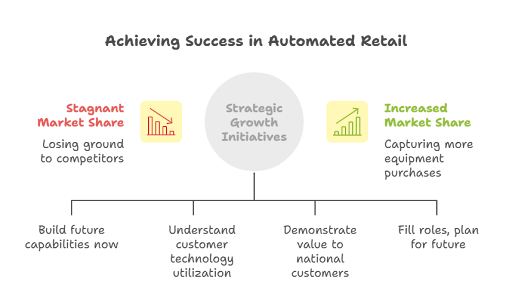
Yeah, yeah. I mean, you know, one, I firmly believe, you know, based on the information I have at the moment that we, there’s a tremendous opportunity for, for just market share growth based on some of our innovations versus say what some of the competitors are doing. So I think in the short run, we can, we can gain some growth just through the existing client base and gaining more than our fair share of
of their equipment purchases. So I think that’s one. Another one is, I think healthcare is a lot, there’s a ton going on in the healthcare space, even outside of just traditional vending. So I know there’s some tremendous opportunity there. And then there’s some new technologies that we have, which probably over the next six months won’t bear us any fruit. When I say fruit in terms of like immediate sales, but I could see that 12 to 18 months
the way consumers are changing, the way the market’s changing, will, you know, that I’m really bullish on where that is headed.
Maria (07:47)
That’s awesome. You did mention basically taking a bigger share of the current market and basically out beating your competition. That’s really interesting. Tell me a little bit more about that. How you guys, what are the plans there without giving up all the secrets?
Rob (08:02)
Yeah, yeah, no, no, yeah, yeah, yeah, yeah, it’s not, it’s not a lot of rocket science as we say. It’s just, you know, large national customers who in the past maybe didn’t do as much business with us, you know, where we’ve done a really good job at getting in the door, demonstrating our, as we always like to say, we have the lowest cost of ownership. We may not have the least expensive piece of equipment, but when you amateurs, amortize that over.
five, seven, 10 years, we feel we provide the lowest cost of ownership. Plus we also have some unique equipment that our competitor doesn’t have. And that’s typically around like, know, refrigerated and frozen equipment, which we figured out to do really well. Some of our competitors have kind of exited that space. So we can lean in with that and, know, and obviously, you know, use that to leverage and gain more of our traditional business as well.
Maria (08:53)
love that. With regards to the fast changing world of marketing specifically, what would you say is your biggest challenge right now as far as marketing goes?
Rob (09:04)
Yeah, I think, and that’s probably, in all fairness of question, better suited for our chief marketing officer. I think probably the biggest challenge is there’s so much information out there. A lot of inbound comes through Google searches and things. And we do a really good job of making sure that we’re relevant in that space when someone is looking for any of our equipment or services.
But there’s so much information in that space. You want to avoid situations where, in my opinion, you get commoditized or these sort RFP, RFQ bid processes can be a bit of a challenge. You just want to be selective at where you spend your time and your energy.
Maria (09:49)
Yeah. Actually, this is so interesting that you said that. With Google being so saturated, have you guys looked into how your consumers are finding you in the new generative search engines like ChatGPT and things like that? Have you guys started experimenting with that?
Rob (10:09)
I’m sure, yeah, that would be a question for Ashley and her team. For me to answer, I’m sure playing around all that space. yeah, How deeply or the results so far, I’m fortunate not in position to probably comment much more than that.
Maria (10:25)
No worries,
Rob (10:26)
today, right? Yeah. Yeah.
Maria (10:28)
Are you guys in your end of things? What type of AI technologies are you guys using right now? Are you using any? Are you exploring some new ones? Like where are you guys with us?
Rob (10:40)
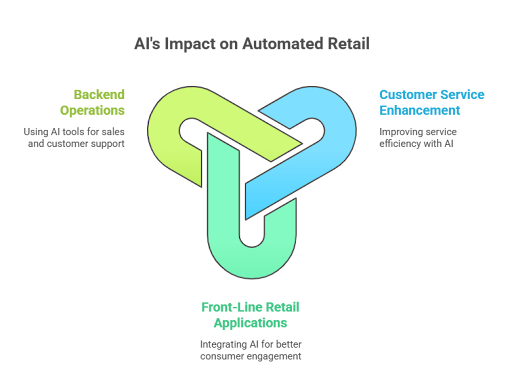
I mean, I know personally, and my team, we use a lot of the chat GPT. think we’re trying to utilize AI to make our service and support system more efficient, right? Right now, it’s as old school as, hey, I call in, I got an issue with my machine, right?
level one, level two, level three. So AI I think can play a huge role in improving that. And I know the team’s working on that. You know, as you try to, because your inbound calls can be something as simple as, I don’t know how to open this machine up to, to, you know, an experienced technician that needs real help, right? So I think AI not just can, it will play a pivotal role as we rebuild that function over the next 12 months.
Maria (11:25)
Yeah, so just even on the customer service side of things, huge, right? So you’re basically trying to free up some of your human power and get it into AI, just some automated messages and things like that.
Rob (11:38)
Yeah, and just get folks because we’ve got hundreds of thousands and thousands of pieces of equipment out there and the level of operational efficiency is going to vary from, you know, could be someone operating something out of their garage to a very experienced technician who works on this stuff all the time. So yeah, I mean, if you can get people quicker answers, you know, as opposed to, hey, Rob, can you talk to XY?
And those things are going to happen, right? But we can definitely become more efficient using the AI technology and the teams are working on
Maria (12:09)
That’s awesome. For you yourself being again, coming in new to the role, you’re basically taking over for somebody who’s about to retire, who’s been doing this for a long time. What kind of trends have you noticed in the industry that you want to stay ahead of as you enter into this role?
Rob (12:26)
Yeah, I think it’s a combination of, again, living in a world of unattended retail. It’s a combination of where your customers are utilizing technology, what’s important to them, but also understanding how consumers buy. Because I think there’s still a ton of opportunity that’s left on the table if we don’t understand our
consumers as well. As you know, society’s going mostly cashless, right? It’s all going cashless, right? So, and that’s, we playing that in a big way, right? But how do we take that to the next level? That’s one big part of it. The younger generation, they shop, they buy differently. Now I’ve worked on the brand side, but you know, it’s a whole nother aspect of having the right products in the right place. But,
on the equipment side, it’s having the right engagement, right? It’s having the right look. You know, it’s having the right technology, right? Whether it’s cashless or, you know, student app, student cards on college campuses, right? So kind of leaning into all those because, you know, cash is going away. In fact, most of our customers would tell you if they get rid of cash tomorrow, they would, they need a money room and armored cars and all the other stuff, right? That go along with it.
But yeah, it’s gonna take a while to phase that out. But yeah, think that’s a lot of it is just continue to understand what our consumers want and how they purchase.
Maria (13:48)
If you look into your competitors, is there somebody out there who’s doing something similar in these processes that you think they’re doing it really, really well?
Rob (14:01)
Yeah, I think, ⁓ you know, the…
Yeah, I mean, I don’t know anyone is doing it so well. You know, one of the advantages we have is being a family business, we can take a long term focus. Our primary competitors are, tend to be divisions of larger companies and they take a very short term approach often. So, you know, I mean, obviously I’m biased a little bit, but I think we have the right approach, you when it comes to
building for the future or more about, let’s make sure, not only are we growing and profitable today, a year from now, three years from now, five years from now, right? So, the flip side to that is, some of our competitors, maybe they have private equity money and they may be able to go out there and buy some share. I mean, one of our primary competitors, had,
They led with their beverage machine for years and did a good job with it. But that runway is starting to end, right? So, know, and I don’t, my opinion is they haven’t really invested into the future in a way that we have as an organization. We own a total portfolio of products.
Maria (15:12)
Yeah, adding more. Yeah, no, it’s okay. So adding more products is one of the ways for you guys to also stay very competitive.
Rob (15:19)
Yeah, and technology. Well, they’re hand in hand, right? Products, technology, yeah. And again, that’s understanding where the consumers are going, right? And how they shop, right? If people nowadays are shopping at, let’s just say, an unattended smart cooler, right? You scan your card, pick your products, close the cooler, and complete the transaction, right? So how do we efficiently
you know, engage with those consumers with the right technology. It’s got to work. It’s got to be, you know, reliable. It’s, you know, it’s, you know, it’s, it’s, it’s got to be, you know, you can’t afford to, you know, have, you you have to watch shrink and all the other things that come into that space. So, ⁓ but yeah, yeah, I think that’s where, that’s where a lot of it’s headed. And I think we’re well positioned.
Maria (16:03)
Do you see that there is a lot of people who are not watching for the consumer behavior and adapting new technologies? Like, do you see people in the market like being very slow to adapt to that?
Rob (16:17)
Well, yes, not as much as before. Most of those on the operator side who haven’t invested or in the technology, most of them well, I’m just selling out or in the process of selling. There are organizations that just made a decision, I’m not gonna reinvest and maybe they were a family business and didn’t have a successor or something and they just, and they sold when they were ready to move on and that’s fine too.
But they’re going to be much fewer and further in between. They won’t survive.
Maria (16:47)
Yeah. What do you think is really like the number one threat for companies like yours and similar ones right now?
Rob (16:55)
Yeah, mean, it’s, you you like to say that, you know, our business has proven to be fairly recession-proof over the years. Fairly, not 100%, right? But any large disruption, right, I think is, you know, that just causes, you know, prospective clients and customers to say, whoa, whoa, whoa, I’m not spending on, you know.
any capital this year, right? I mean, that’s kind of in the short run, I would say, ⁓ if there were some major disruption, you know, we’ve done well in, you know, up and down economies, right, for the most part. But market saturation, you know, maybe companies hold onto a fleet a little longer. But over the years, we’ve learned those things, they do come back, right? You know, we’ve had large customers who used to buy hundreds of
pieces of equipment every year, know, now I’ll say, hey, I don’t need anything this year. And that’s going to happen, right? It’s probably not a whole lot you can do to prevent that, right? But other than getting in, strategically planning and understanding that, you know, where they’re headed and understand where our solutions are and how we can help them in the future.
Maria (17:58)
Yeah. And again, going back to the fact that you’re so new to the role, what are you like mostly looking forward to in this new role and new chapter in your career?
Rob (18:08)
Yeah, I I’ve worked in this industry over the years. it’s reconnecting with some folks and all was great. I’m just super excited to work for, it really is an amazing organization. We’re family owned. We grow the right way, right? We’re not trying to buy market share or do anything crazy or appease any, you know.
private equity investment. There’s nothing wrong with that at all, right? I’ve been on all sides of that. Some work, some haven’t, right? Yeah, for me, it’s more about just, you know, the culture and just seeing the industry transform over the next three to five years. Because it’s coming, it’s already starting, right? But I think it’s going to be amazingly exciting in, you know, where we can take our equipment and our solutions and our technology.
Maria (18:54)
Yeah, actually, you did mention I did ask you about, you know, some industry trends that are coming. We talked a lot about how people are buying. What else do you think is coming down the line building off of what you just said?
Rob (19:05)
Yeah, mean, you it’s, you we talked a little bit about AI, right? But AI on the equipment side, I think is also going to be, you know, like anything, right? It’ll start out slow and you know, some of the basics, but you know, as you know, you can make your equipment and your retail a heck of a lot smarter, right? As you, you know, maybe on a college campus, right? You know,
How do you implement AI to engage more of your customers? Just thinking out loud right there. So I think that’s going to be amazingly excited. mean, AI is the big buzzword right now, right? Not just in our business, right? So everyone is super excited about it or maybe not. I don’t know. But I think that’s going to come more into play on the front line, As opposed to just like on the reactive side.
Maria (19:55)
Yeah. What about product demonstration? Have you have thought about using AI tools for any of that?
Rob (20:03)
Yeah, so that’s a great question. I haven’t personally given it much thought. One of our lead engineers is a, he’s working on his PhD. he’s actually, John is actually doing, know, starting to really touch on that, know, on just how AI in general is going to impact our business in the short and long run. So he’s, yeah, he’s kind of our, he’s our AI geek, know, but. ⁓
Yeah, it’s super cool. I mean, we do, you know, demos today, right? But I could see where that would just be, you know, just take it to the next level. And again, it’s coming. It’s going to happen.
Maria (20:37)
Yeah, it’s and it’s coming so fast because now the machines are fixing the machines, right? So it’s no longer. Yeah, it’s speeding everything up.
Rob (20:44)
Yeah, yeah, no, exactly right. Yeah, yeah, yeah, yeah, exactly. Yeah. So no, it’s pretty cool. Yeah. I mean, we’re already building in things into our equipment, you know, with future expansion in mind that, okay, you know, we can use voice activation or we can, you know, so yeah, it’s interesting. Yeah. And let’s be honest, right? The younger consumers, right, are more engaged into that and that’s our future business.
Maria (21:09)
Yeah, no, 100%. And the younger consumer also how they find business is changing, right? That’s what we were talking about earlier that Google is great. Of course it’s going to adapt, but how people are even finding things now, right? The search engines themselves are so different now. So how people are even finding products that they want to consume and the challenge for businesses to appear in those new basically.
Generative search engines is going to be quite interesting to see how people are going to be adapting to that.
Rob (21:41)
Yeah, it’s wild. Like I said, there’s a lot, know, I, you know, for some of my age, I try to stay on top of that, but it’s sure there’s a ton I don’t know, right? It’s, but it’s, super exciting. You know, just how it impacts our business life of course is, but even just our personal lives too.
Maria (21:56)
Yeah, I actually had a podcast with somebody that was, they do lights in different type of lasers. So they’re actually working to demonstrate their product through a hologram. Have you seen some of product demos done through holograms yet?
Rob (22:12)
don’t, if I have, I don’t think I have. Yeah, I don’t think so. Yeah, yeah, I’ll have to take a look at that.
Maria (22:17)
But yeah, and it’s becoming such a small and portable thing. It’s no longer those big decks anymore. It’s just this tiny little machine, kind of like how they used to have it in the movies.
Rob (22:28)
Wow, yeah, that’s wild. That’s wild. Yeah, yeah, go figure, right? I mean, I haven’t, yeah, it’s just, yeah. Yeah, I think we’re in the midst of taking, know, every so many years, technology just seems to take some major steps forward, right? You you know, make some big step change. And I think we’re probably in the middle of one of those right now with AI, you know, where just everyone is scrambled on how that.
scrambles out the, everyone’s looking at how they can help enhance their business, right? Whether it through services. I mean, services are probably the lower hanging fruit, right? A little easier to, you know, but then how do we, you know, how do we use it to engage consumers more on the retail side or, you know, whatever your business is, right? I mean, you know, every retailer, every company’s investing in
Maria (23:14)
I know that you have a lot of experience in the industry. How has technology changed your career trajectory over time, when aspects to growth opportunities with technology?
Rob (23:27)
Yeah, I mean, I think, you know, it’s for me personally, it’s, you know, and I would my advice and it just always try to, you know, never think you’ve learned everything. Right. So always try to learn more and stay on top of it. You know, selfishly, I’m I love engaging with people younger and my daughter’s age or whatever. Right. So I always find that very interesting. You know, because we’ll put it this way.
If you, if you don’t stay on top of it, or at least keep yourself relevant through it, you’re not going to grow. Right. So, and it’s fine. Some people may, you know, may be comfortable with that. ⁓ but as long as the energy is there and, and, you know, I like to read a lot anyway. So it’s, it’s, it’s, it’s good to stay up with the set. Yeah. Yeah. Try to stay relevant, right. With your skillsets, you know, whatever role or function that you’re in, in my case, it’s, it’s sales leadership, but it could be whatever it could be, could be accounting could be right, but just.
always try to stay relevant as to, you know, what’s new and the trends and how it’s going to help you, you know, be, be more effective and hopefully a more valued associate.
Maria (24:27)
How big is your guys’ sales team? Do you have many roles like SDRs, business development? How does it go for you guys?
Rob (24:36)
Yeah, so it varies by our channel of business. The Pickard channel that I own, have ⁓ several direct sales folks and then several independent distributors who are third parties. So we use a hybrid. There were a couple of unique opportunities within the channel where some folks became available, but they wanted to be independent.
it works for both of us. So some independent distributors. And then we’ve also got, you know, network of larger distributors, which buy our equipment and resell it so they don’t work for you. But it’s still a big part of your job to support them properly, make sure they understand everything and, you know, cascading the right messaging and, you know, focus on the right opportunities, right? So, you know, so it’s really leveraging all those relationships.
Pull from whatever levers you can, right? To try to grow your share.
Maria (25:27)
What do you think would make your sales team the most successful?
Just with respect to let’s say future opportunities, growth, what do you think your sales team would need to be top of
Rob (25:38)
Yeah,
know, it’s in fairness, it’s probably a little soon. But one of the things I’ve used in prior roles and we’re working on now is there are some AI tools like Zoom info. So we haven’t quite implemented that stuff. I think some of those will help us.
even if it’s not for new customers, but it could, is staying on trends so that you can support your existing customers, right? And get ahead of some of the opportunities. You always want to be, you know, there’s folks that make equipment like us, right? And it’s, they’re all good and they’re all, you know, they’re all certified and whatnot. But you always want to be, you know, that
preferred partner, right? And here’s why. So there’s probably some tools there, you know, that some AI tools that we can get implemented that’ll help the team.
Maria (26:27)
Yeah, absolutely. Are you looking to also grow your team or are you just thinking about just maintaining for now and then going from there? What’s your vision for the role?
Rob (26:36)
Yeah, yeah. We’ve got, I have a role to fill right now for retirement. So that’s priority number one, to get that done the next whatever, 60 days before the end of the year. So we got a couple folks there. You know, at some point I’d like to get someone who’s maybe, you know, younger than me to eventually backfill my role when I’m no longer in role. That don’t seem to happening anytime soon, but.
Maria (27:00)
Yeah, I think you have lots of time still.
Rob (27:02)
Yeah,
well, yeah. Yeah, yeah. So there are there are some markets where maybe just rethinking, you know, strategy opportunity is there opportunity for another independent rep. So, yeah, again, I won’t do anything haste until, you know, get a better understanding. Yeah, wouldn’t be. Yeah, exactly. Exactly. Company, the organization’s done a great job prior to me, so I don’t want to I don’t want to come in here and screw anything up.
Maria (27:22)
That’s great.
For
sure. No, I don’t think you could. So what is one piece of advice that you would give to our listeners about tackling growth challenges?
Rob (27:42)
Yeah, would, you know, if I could, I would just say, hey, embrace the change in, you know, whatever it is that you do, whatever your line of business is, whether it’s, always think forward, look for the next trend, look for, you know, you don’t want to be, you don’t want to miss the opportunity, right? So it doesn’t mean you need to lean in and be an expert on it, right? I’m not an expert on a lot of things, right? But just embrace change.
The other thing is, you know, maybe this comes with age is I am the older I get, the more I realize there’s a lot I don’t know. so I don’t need to be the smartest person in the room. I don’t care to be anymore. so it’s not, not above me to just randomly reach out to people through LinkedIn or through other tools that whom I might, they might be experts in some areas. I did this when I worked in.
you know, we work for compostable straw manufacturer, right? It was trying to charter new waters to grow that business. So it was like, hey, you know, here’s how I can help you, right? There’s a lot of things I don’t know, right? So to help build that business from scratch, which was very rewarding. But it really was just a lot of that was just about, you know, hey, talk to experts. Don’t, you know, it’s okay. You don’t have all the answers, right? So.
You know, I would say just, just embrace it, lean into it. It’s an exciting world out there. you know, that’s my approach and leverage your network as much as you can in a positive way, because it comes around the other way. I have a lot of folks that reach out to me because, know, maybe some channels where I’ve had expertise and I, you know, I, I like to pay that forward as well. Right. Cause it’s always, you know, the end of the day, right. We’re all trying to advance the ball and you know,
improve our perspective organizations and our careers. But at the end of the day, it’s the people that you work with I think that make a lot of it.
Maria (29:29)
That’s great. Actually, speaking of networking, for our listeners, if they wanted to get in touch with you, what kind of connections are you currently looking to grow in the industry? Is there somebody specific that you’re looking to connect with?
Rob (29:44)
Yeah, no, wouldn’t, know, that’s a great question. I haven’t given that a lot of thought at the moment because I have a pretty broad network, you know, in the industry and out of the industry, right? So, you know, I mean, if you’re anyone is in, you know, even as questions about automated retail, please connect or if you have a idea, goofy one, you know, or maybe ⁓ you’re in healthcare.
And maybe there’s a way that automation and controlled dispensing can help you, right? So I think I’ve worked when I was in the beverage business a lot in the healthcare segment. So I tend to think there’s a lot of opportunity above and beyond there. But yeah, mean, any crazy ideas or not, or if you’re trying to, if you’re working on some food service opportunities and you.
you need to talk to someone or, you know, I’ll help anyone out, know, provide it’s not my competitor, but.
Maria (30:38)
Those can stay away, you guys stay away.
Rob (30:41)
Yeah,
yeah. Actually, we all know, even our competitors, we were all pretty friendly. don’t, you know, we respect each other. I should just say, put it like that. Yeah. Yeah. Yeah.
Maria (30:51)
I love that you’re open for new opportunities.
Rob (30:54)
Yeah, always. Yeah, yeah, yeah. Any, you know, there’s no idea to do.
Maria (30:59)
I love it. Well, thank you so much, Rob. This was fantastic. I wish you all the best in the new role. You’re gonna do great. I love the energy. You have the right to
Rob (31:09)
Yeah, we’ll keep it going and have some fun in meantime.
Maria (31:11)
Yeah, I love it. All right, thank you so much. Okay,
Rob (31:14)
Be well.
Maria (31:15)
okay.
Hey, Rob, can you still hear me?
Hey Rob, can you still hear me?
More Podcasts
Standing Out in a Competitive Market: How AT Sensors is Navigating the AI Era
November 3, 2025 18:23
Watch Podcast →
From Online to Everywhere: How Obvi Scaled from D2C to 20,000 Retail Doors
November 3, 2025 16:05
Watch Podcast →
How Assett Transforms Female Founders Through Strategic Branding
November 3, 2025 14:48
Watch Podcast →