Katherine (00:02)
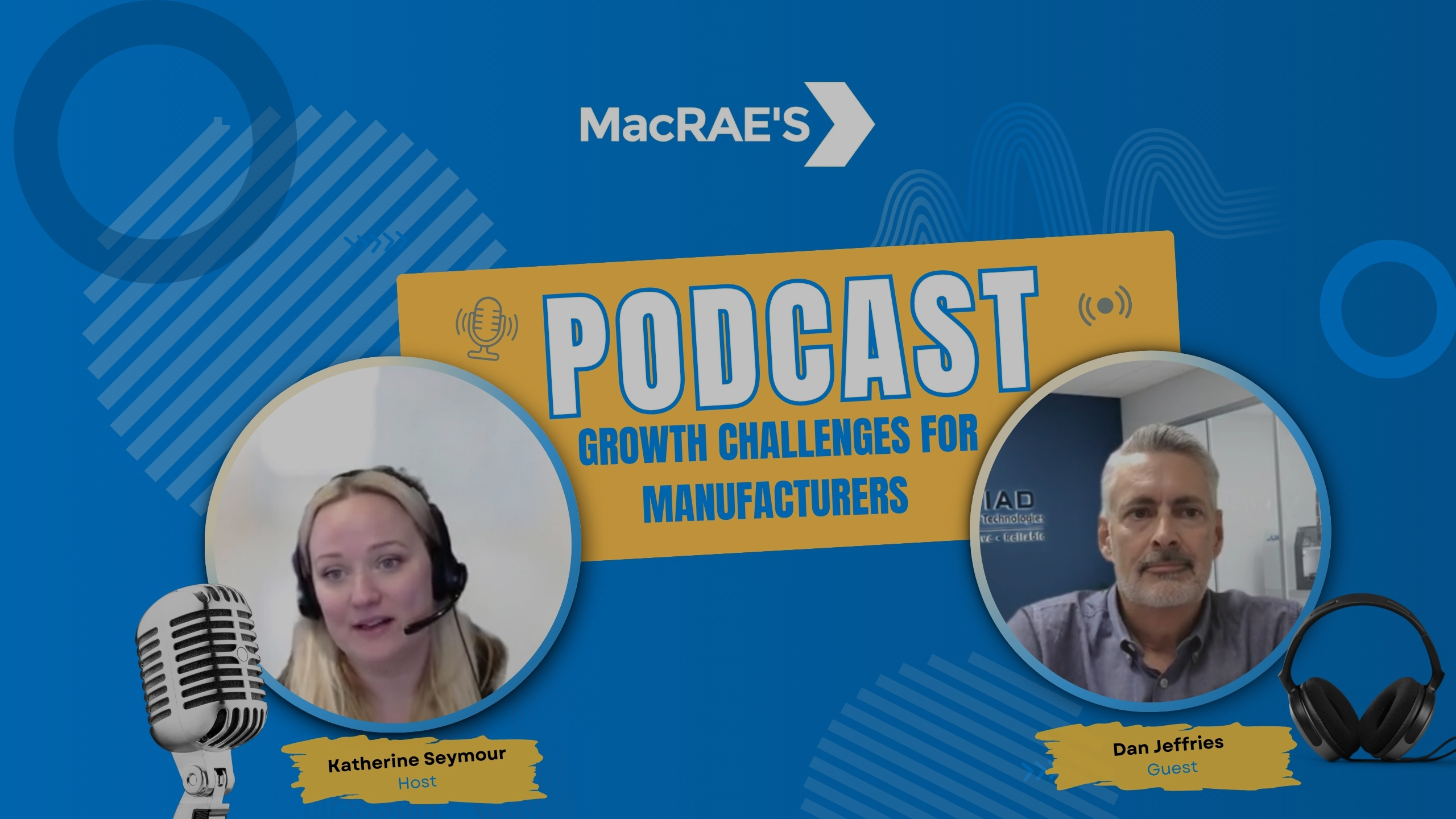
Hi Everyone and welcome to another episode of Growth Challenges for Manufacturers and How to Overcome Them. I’m your host, Catherine Seymour. This episode is brought to you by MacRAE’S, trusted by North American businesses for over 100 years. As a leader in B2B digital marketing, we help industrial and manufacturing companies struggling with stagnant growth and lead generation. By leveraging advanced AI integration and automation tools in our SEO and lead generation programs,
we help you appear more prominently on search and AI results like chat GPT. This drives significantly more traffic to the website resulting in stronger lead flow, increased revenue and crucial in today’s competitive digital landscape. Learn more at macraes.com today. Today I’m joined by Dan Jeffries, President and CEO of Triad Electronic Technologies.
A company that has been designing and manufacturing advanced electronic systems that support critical defense, aerospace, and industrial applications. With a strong focus on reliable, innovative, and meeting the high demands of the industry, Triad has built a reputation for delivering solutions that perform for the most demanding environments. Dan, it’s so great to have you on the show. Welcome.
Dan Jeffries (01:21)
Thanks for having me, Katherine. I appreciate it.
Katherine (01:25)
Thanks. So Dan, let’s get started with your journey. What led you into the world of electronics and ultimately becoming president and CEO of Triad?
Dan Jeffries (01:36)
Well, that’s a good question. ⁓ I’d like to say it was some grand idea that I had to start a company and kind of grow it from the ground up. But it really came more out of a ⁓ practical decision, right? So we were, my wife and I were living in downtown Chicago. We were both in the corporate world and had been for years. We had
Katherine (01:59)
Bye.
Dan Jeffries (02:01)
two young kids and another one on the way and her entire family was from Arizona. you know, ⁓ her father was in component manufacturing here in Arizona his entire life and had sold that company and was retired and bored. And so we kind of took the opportunity to bring all of our skill sets together and ⁓ look for an opportunity in Arizona that
would complement our skill sets and so in 2005 we found Triad Electronic Technologies and we bought it in April of 2011.
Katherine (02:41)
Fantastic. As a leader in a specialized industry, what do you find most rewarding about the work that you do and the team that you lead?
Dan Jeffries (02:54)
Really the most rewarding part is twofold, think. It’s number one, seeing the impact that we can have with the products that we produce. ⁓ There’s a lot of very interesting projects. Sometimes we know what they go into, sometimes we don’t know what they go into, but ⁓ oftentimes we do and it’s really exciting to be able to see how our work translates to
bettering our customers, supporting their mission, ⁓ and doing that in ways that continues their growth along with ours. From a leadership perspective, it’s growing a team. And we have a culture here that’s very family oriented. ⁓ it’s that, again, coming from the corporate world, it’s a very different environment. So.
having that family atmosphere, that family culture, and really caring about the people that support the mission as well is extremely rewarding.
Katherine (04:01)
Amazing. For those who might not be familiar, can you kind of describe what the company does and what are the areas and industries you primarily serve?
Dan Jeffries (04:12)
Yeah, I mean, we really have three core competencies and those are ⁓ so we’re what’s called an electronics contract manufacturer. ⁓ So also known as an EMS company, Electronics Manufacturing Services, because, you know, in this industry, we love acronyms. ⁓ So as a contract manufacturer of electronics, we bring other people’s designs to life, right? So they design the product.
we build the product for them. So whether that’s a circuit board assembly, whether that’s a system integration, otherwise known as box build, or cable assemblies, that’s really our mission. So our focus is on those three core competencies because we built circuit boards. Eventually they want us to put it in the enclosure because they figure why not have us do that and then we have to tie it all together with the wires and cables and such.
all of those offerings complement one another. So, and obviously there’s a host of other competencies that support those. So whether that’s supply chain risk management, ⁓ IPC training and awareness and other kind of complementary ⁓ competencies.
Katherine (05:33)
The electronics and defense technology landscape is rapidly evolving. What are some of the biggest challenges that you’re seeing in the industry today?
Dan Jeffries (05:46)
Well, from a challenge perspective, mean, I don’t think the challenges are necessarily unique. They’re certainly not unique to us. anybody who does this work faces the same challenges, whether that be product lifecycle, component lifecycle, supply chain shortages, et cetera. So there’s a lot of challenges of pricing pressures.
Katherine (05:54)
Hmm.
Dan Jeffries (06:14)
obviously ⁓ also a big part of that, right? So ⁓ those are kind of the common themes that we’ll run into from a challenge perspective, but there are things environmentally or in the world events that certainly bring some to the surface more at a certain time than others, for instance. So ⁓ an example would be tariffs. mean, everybody’s dealing with tariffs right now and it’s
Katherine (06:15)
Right, right.
Yeah.
Dan Jeffries (06:40)
You know, it’s not so much the tariffs, that’s way above my pay grade, right? But it’s, you know, the ability to predict and accurately quote and, you know, customers want price stability as much as possible. And so we have to react to that as we do to any changing economic situation. We have to react to that and work in our customers best interest through transparency and
Katherine (06:52)
Right.
Dan Jeffries (07:08)
technology to make sure that we have access to the best information possible to be able to do that. ⁓ So it’s really, you know, the challenges change, some escalate, some de-escalate, they will change, but the approach is the same. Look, we’re problem solvers in the end. Things are going to happen. So we’re here to be expert problem solvers and ⁓ guide and navigate our customers through those challenges in a way that is
you know, transparent and making sure that there’s no surprises to them as much as possible.
Katherine (07:44)
For sure, for sure. Supply chain reliability continues to be a pressing issue across manufacturing. How are you addressing this challenge or is it affecting your company in any specific way?
Dan Jeffries (08:01)
Supply chain challenges, you know, well, supply chain management and risk management is critical and that’s become more critical. I mean, we’ve all lived through the pandemic. ⁓ That was, you know, a real eye opener for a lot of people relative to the fragility of the supply chains. So there’s been, again, above my pay grade, a lot of changes going on in that space. But from our perspective, you know, navigating that
Katherine (08:06)
Yeah.
for sure.
Dan Jeffries (08:30)
any supply chain issue has to do with people who know what they’re doing, a well-trained staff of experts and also technology. mean, we’re very big in technology. We’re in a world where real-time information is critical. So we have to have access to the information and we have to take that data and we have to make actionable information out of that data. So we invest heavily in technology that allows us to do that.
Katherine (08:37)
Mm-hmm.
Right.
Dan Jeffries (08:59)
that allows us to not only at quote time be able to navigate those supply chains and have visibility that we need, but also on an ongoing basis. you know, we want to stay two steps ahead of our customers. Oftentimes it’s us pushing to them that you normally order, you know, ⁓ on an X periodic basis and the lead time on
this particular assembly has increased or what have you. So really pushing that forward and helping customers be prepared for any supply chain challenges. And then again, having that technology and that visibility to be able to solve those many times before it even needs to go to a customer.
Katherine (09:47)
Makes sense for sure. Cybersecurity and technology resistance has been more important than ever. How does your company kind of work around these areas in your solutions?
Dan Jeffries (10:02)
Interesting question. So cyber security. I mean, there’s a lot of focus on NISTC You know CMMC one two, three four levels, etc. Right? So really ⁓ taking care of customer data. We do work for ⁓ ITAR customers. So they are restricted restricted projects ⁓ So we’re vigilant about maintaining secure transfer of information ⁓ secure FTP ways of doing that
Katherine (10:20)
Bye.
Dan Jeffries (10:33)
and protecting our customers’ data and then just from ⁓ an internal perspective, making sure that we have robust security systems and firewalls that protect our customers’ information as well as our proprietary information. So that’s going to continue to be a talking point, I think, in the industry for some time to come. We see it all over the place. It’s all over the news daily, right? So maintaining a focus on
on that security is critical.
Katherine (11:06)
Hi, thank you. You have a wide range of specialized products and solutions. Can you walk us through how you help your customers select or develop the right technology based on their needs? I know you mentioned that they sometimes come to you with a product and you kind of help them create that. How do you walk them through that process?
Dan Jeffries (11:28)
Well, I’d back that up even a little bit to the early stages of the design. So one of our complimentary ⁓ competencies and offerings is design for manufacturability, right? So oftentimes we’re working with engineers or engineering teams that ⁓ don’t have a lot of exposure to the manufacturing side of the equation, especially when that comes.
Katherine (11:36)
Okay.
Hmm.
Right.
Dan Jeffries (11:56)
comes
to circuit board assembly, et cetera. So really it’s having the heart of a teacher in those situations and just ⁓ helping with input at the early stages of that design that can save them money ⁓ on the manufacturing, whether that be labor or whether that be ⁓ part selection, right? So guiding them through cost saving measures or something that’s gonna improve the reliability from a manufacturing standpoint.
Katherine (12:19)
Right.
Dan Jeffries (12:26)
⁓ is really where we want to be involved in that.
Katherine (12:31)
For sure, for sure. How do you balance serving government or defense contracts with serving commercial and industrial opportunities as well?
Dan Jeffries (12:44)
Well, mean, from our perspective, you know, we’re building products, right? So whether they’re, you know, what their end use intention is, it doesn’t really change our focus. We’re oftentimes working as a subcontractor to a subcontractor when it comes to government related security related projects. ⁓ And from an industrial perspective, we have
Katherine (12:49)
Mm-hmm. Mm-hmm.
Dan Jeffries (13:09)
We have a large customer base in the industrial sector, OEMs, engineering firms, ⁓ you know, so even other contract manufacturers where we complement their skill sets or what have you. So ⁓ we don’t really focus differently on those. ⁓ We focus more on those core competencies and who needs those core competencies.
Katherine (13:21)
Right.
Great.
Make sense for sure. If you can instantly improve one aspect of the electronic supply chain or customer experience, what would it be and why?
Dan Jeffries (13:51)
So the magic bullet type thing.
Katherine (13:54)
Magic bullet, yeah. For sure.
Dan Jeffries (13:57)
Unlimited resources what what what anybody could do with unlimited resources, right? ⁓ Yeah, no, I think you know, we’re we’re entering into interesting times ⁓ both from a technological standpoint Meaning the software side of it and also, you know ⁓ kind of the the labor talent standpoint, so ⁓
Katherine (14:03)
For sure, for sure.
Hmm.
Right.
Dan Jeffries (14:26)
The things that I would like to unlock ⁓ that would help everybody ⁓ is a reinvestment and a re-interest in manufacturing as a career. ⁓ I think we may be seeing some hints of a shift in that mentality in the culture, and that’s going to be good. There’s a lot of good job opportunities.
Katherine (14:42)
Yeah.
Hmm.
Dan Jeffries (14:53)
We have educational institutions focusing a little bit more on that these days. And in particular in Arizona, which is really a hot spot for electronics ⁓ and technology overall, incubators, et cetera. ⁓ There’s a real close tie in with the universities and such. So I think that’s part of what’s helping. And then on the software side of it, again, Data is critical. Information is key.
Katherine (15:04)
Yes.
Dan Jeffries (15:21)
And AI, you we can’t have a conversation without using the acronym AI, right? So AI is going to make a big difference. And I think lastly, I’d say additive manufacturing relative to electronics, especially with regard to circuit boards, the bare boards themselves, being able to do even more rapid development using additive technologies for, you know, circuit board substrates and such.
Katherine (15:28)
Mm-hmm.
for sharing.
Mm-hmm.
Dan Jeffries (15:51)
Because, you know, in reality with the changes in the overall world landscape and reshoring, nearshoring, etc. the U.S. is still, you know, far behind in their capacity to be able to produce bare circuit boards that we need for electronics. So anything that helps with regard to that, whether that be additive
manufacturing or other opportunities relative to just speeding the development cycle.
Katherine (16:27)
for sure. Looking ahead, what technological advancements or trends ⁓ are you most excited about or you think will have the most impact for your clients?
Dan Jeffries (16:39)
I think I stole your thunder in my last response with that answer. So I do think it is ⁓ really more on that software side and technology side relative to AI and gaining more efficiencies and ⁓ really helping with the supply chain risk management. We’ve been doing it for years. Others have been doing it for years. ⁓
Katherine (16:42)
Yeah.
Yeah!
Mm-hmm.
Dan Jeffries (17:07)
using AI, whether it was called AI at the time or not, but using technology to make processes more efficient and be able to make timely decisions. And then again on that, on the manufacturing side itself, it’s really the technologies are emerging for additive manufacturing and other opportunities for efficiencies and improved capabilities on those sides.
Katherine (17:13)
Yeah.
Mm-hmm.
Amazing. Can you share a recent success story, perhaps a project or a partner that really demonstrates what your values and innovation is all about?
Dan Jeffries (17:51)
Yeah, I mean think there’s a couple of them. Recent, ⁓ you know, we’re seeing a lot of activity from new customers in the space of, you know, ⁓ UAV or drone technology. So, you know, we’ve got some really interesting projects going relative to that with, you know, and I’m not, these aren’t small quad copters. These are very large, you know, yeah. So think.
Katherine (18:05)
Yeah.
Massive ones,
Dan Jeffries (18:21)
think things like in the realm of the Amazon drone delivery and those type of things, right? So we see a lot of activity from that and we’ve got some exciting projects that we’ve done just this year for ⁓ prototyping those. We’ve got another one in the same type of space that we’ve been doing work for for probably about seven or eight years in that same space. But probably the…
Katherine (18:25)
Mm-hmm.
Dan Jeffries (18:49)
The project that stands out the most to me is, it goes back a ways, ⁓ but it’s still a great story. It has to do with, you know, a ⁓ rapid development for the military. ⁓ And these were robotic devices to be able to remotely explore and inspect improvised explosive devices.
Now the time to market was key on this. It had to be done very quickly. We were working with a design engineering firm that was a direct contractor for the US government. They were literally designing the product in our facility as we were building the product. So our ability to staff up and actually
Katherine (19:37)
Wow! Wow!
Dan Jeffries (19:44)
⁓ be able to work side by side really emphasizes, you know, pillars of being, you know, flexible, responsive and reliable, right? So in U.S. flexible, responsive and reliable is what differentiates and that’s what we’re really trying to do. And being able to have that flexibility by, you know, ⁓ being a small company and being
Katherine (19:53)
Yeah, absolutely.
Dan Jeffries (20:12)
you know, having all the decision makers where we need them, when we need them, allow us to do that sort of work alongside a customer. So yeah, it was an interesting time. I’d be sitting in my office and I kind of get that sense that somebody was looking at me and I would look to my office door and there would be this ⁓ robotic machine, you know, they were doing range testing, et cetera, obviously. So it was a very cool project.
Katherine (20:16)
Yeah.
Amazing
Yeah.
Yeah, very
cool. Very cool. Finally, what advice would you give to businesses evaluating electronic technologies for mission critical applications?
Dan Jeffries (20:58)
So customers, potential customers or others in the space.
Katherine (21:02)
Yeah,
potential customers, others in the space, you have any insights that you might want to share that you see that. Yeah.
Dan Jeffries (21:12)
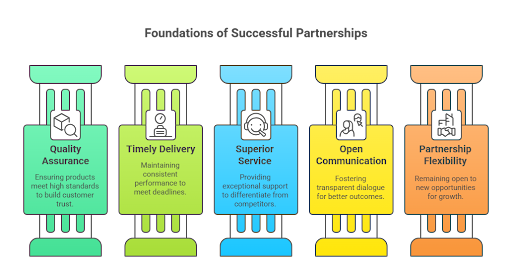
Sure, I would say the focus should be on communication. From our perspective as a service provider, it’s being honest and transparent. The more open dialogue that we can have, the more communication we can have regarding a project, the more successful it’s going to be. ⁓ And I would say just as far as advice is concerned, these things that I’ve talked about, whether it’s, you know,
Katherine (21:18)
Right.
Dan Jeffries (21:42)
I mean you have to have a quality product, right? That’s a ticket to the dance. know, everybody’s gonna expect a quality product or guess what? We’re only gonna be working. They’re only gonna come to us once, right? We have to deliver on time, right? So we have to say what we do and do what we say, right? Now that doesn’t mean exceptions don’t occur, but that’s where that communication comes in. So I would emphasize that
Katherine (21:45)
Right.
That’s true. Yeah. Yeah.
Hmm.
Dan Jeffries (22:12)
that those are the two entry criteria. You’ve got to have those. But the service is what makes the difference. It’s what differentiates. It’s the experts that we have, the technology that we have to be able to do that. And the reality is that there’s a lot of companies out there trying to do this well. customers have options.
And a lot of new customers that we see, new prospects that we see, come to us from a space of being disappointed in what they have received. And that may be quality, that may be on-time delivery. I would say that communication probably led to, lack of communication probably led to those challenges. So I would say, customers openness and willingness to believe that there are
Katherine (22:50)
.
Dan Jeffries (23:08)
others out there who do this well ⁓ and give them the opportunity to do that.
Katherine (23:15)
Very cool. Dan, thank you so much for joining us today and sharing your insights of your innovation and electronics in this most demanding industry. ⁓ Thank you for your insights. Really great conversation. And I know all our listeners will appreciate it as well. Thanks again for being here. And to everybody who’s listening, we’ll see you on the next episode of Growth Challenges for Manufacturers.
Dan Jeffries (23:41)
Thank you so much.