- Home
- Services
Curious How You Show Up in ChatGPT?
See where AI search recommends you, and where it recommends a competitor instead.
Driven by Values, Focused on Your Growth
MacRAE’S founder, Hugh Owen, recognized early the rise of AI and digital acceleration. His vision defines MacRAE’S as a future-ready growth partner.
Curious How You Show Up in ChatGPT?
See where AI search recommends you, and where it recommends a competitor instead.
Driven by Values, Focused on Your Growth
MacRAE’S founder, Hugh Owen, recognized early the rise of AI and digital acceleration. His vision defines MacRAE’S as a future-ready growth partner.
Curious How You Show Up in ChatGPT?
See where AI search recommends you, and where it recommends a competitor instead.
Driven by Values, Focused on Your Growth
MacRAE’S founder, Hugh Owen, recognized early the rise of AI and digital acceleration. His vision defines MacRAE’S as a future-ready growth partner.
- AI SEO
Curious How You Show Up in ChatGPT?
See where AI search recommends you, and where it recommends a competitor instead.
Driven by Values, Focused on Your Growth
MacRAE’S founder, Hugh Owen, recognized early the rise of AI and digital acceleration. His vision defines MacRAE’S as a future-ready growth partner.
Curious How You Show Up in ChatGPT?
See where AI search recommends you, and where it recommends a competitor instead.
Driven by Values, Focused on Your Growth
MacRAE’S founder, Hugh Owen, recognized early the rise of AI and digital acceleration. His vision defines MacRAE’S as a future-ready growth partner.
Curious How You Show Up in ChatGPT?
See where AI search recommends you, and where it recommends a competitor instead.
Driven by Values, Focused on Your Growth
MacRAE’S founder, Hugh Owen, recognized early the rise of AI and digital acceleration. His vision defines MacRAE’S as a future-ready growth partner.
- Company



Contact US
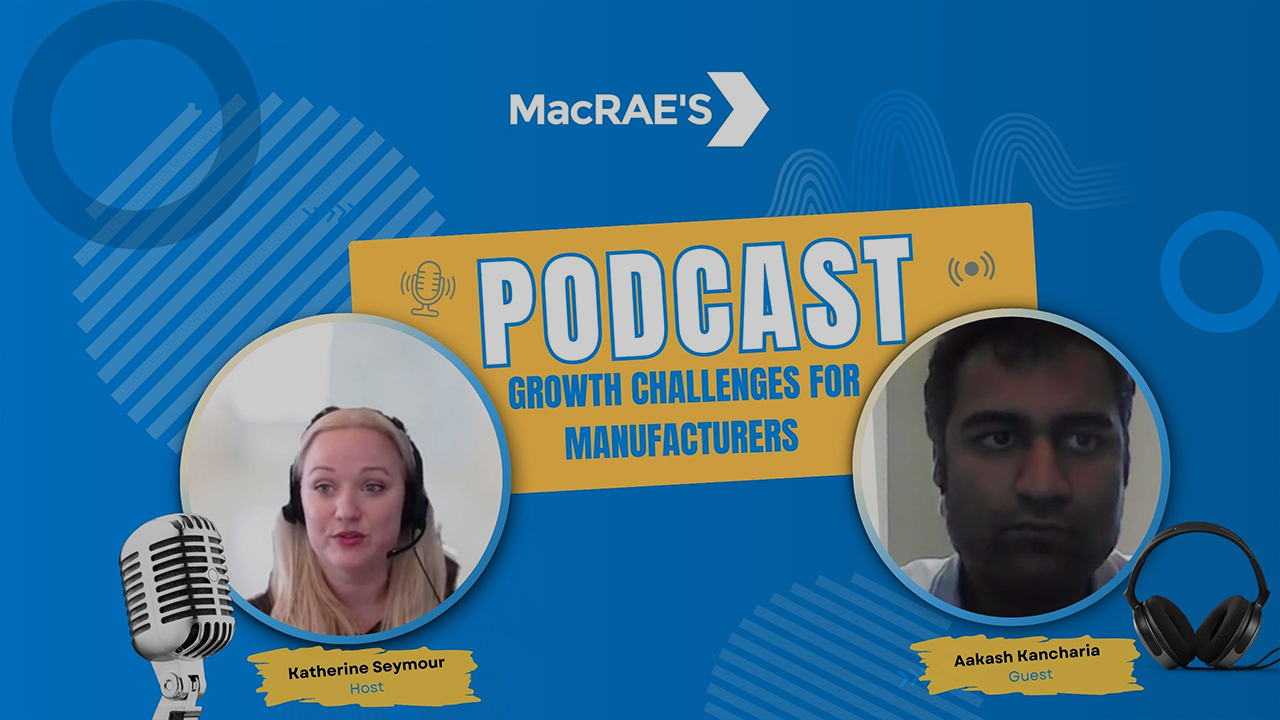

Transcript
Katherine (00:00)
Hi everyone and welcome to another episode of Growth Challenges for Manufacturers and How to Overcome Them. I’m your host, Katherine Seymour. This episode is brought to you by MacRAE’S, trusted in North American businesses for over 100 years. As a leader in B2B digital marketing, we help industrial and manufacturing companies…
struggling with stagnant growth or lead generation. By leveraging advanced AI integration and automation into our SEO and lead generation programs, we help you appear more prominently in AI results like chat GPT.
This drives significantly more qualified traffic to your website, resulting in stronger lead flow and increased revenue. Crucial in today’s highly competitive digital landscape. Learn more at macraes.com today. Today I’m joined by Aakash Kancharia, CEO of Arc, a global leader in providing engineered solutions for piping, structural and mechanical systems.
in the energy and industrial sectors. For over 30 years, ARC has been delivering innovation, precision, and quality, offering broad range of products and services from custom pipe supports and hangers to complex fabrication and engineering solutions. ARC’s commitment to engineering excellence, on-time delivery, and a customer-focused service has made them a trusted partner for the world’s most demanding industries, including power generation,
oil and gas, petrochemical and industrial manufacturing. Akash, it’s so great to have you here. Welcome to the show.
Akaash Kancharla (01:32)
Alright, thanks for having me.
Katherine (01:34)
Thanks so much. So let’s get started with your journey. Can you share how you came into the role as CEO of Arc and what drew you to lead this company? ⁓
Akaash Kancharla (01:43)
Sure that probably happened about five years ago it was fairly organic in the sense that I had a number of technology companies that I was working as a consultant with and they had a common theme or common set of problems one one could say and it made sense to sort of join join ARC
which had a good platform of providing specialty services and leverage that network.
Katherine (02:09)
you
Amazing, ARC has been operating for over three decades. What would you say is the core values and principles that have fueled its success?
Akaash Kancharla (02:21)
So it’s definitely a different company than I would say now than it was even 10 years ago. The focus has definitely shifted towards new technology, robotic solutions. It even had a different name that really demonstrates a shift in priorities towards adoption of new technology, new engineering capabilities.
Katherine (02:41)
Bye.
For the listeners who may not be familiar, how would you describe ARC’s products and services? And what are the industries that most rely on your products?
Akaash Kancharla (02:55)
Sure, our most…
Concentration for this year has definitely been in energy. So we provide a number of solutions for the inspection and remediation of different kinds of assets. So these can be pipelines for oil and gas. These can be heat exchangers in the nuclear energy sector. These can be ⁓ power plant ⁓ inspection capabilities where we’re assessing things for thermal stress.
Katherine (03:09)
Bye.
Akaash Kancharla (03:23)
for potential electrical faults, things like that. We’re basically providing an all-around inspection and testing service to these various verticals.
Katherine (03:34)
a lot of high demand industries for sure. For the markets that ARC serves, what would you say helps you be like with your global client base, being so diverse in their needs and adopting different engineering or manufacturing solutions for a wide range of geographies and industries?
Akaash Kancharla (03:52)
Well, our concentration is definitely in the Northeast. We have a few projects ⁓ in Japan. We have a few spread throughout Europe between Germany, France, and England.
I would say that those are definitely expanding the overseas projects, mainly because a lot of the fundamental science is the same. So from a regulatory perspective, we have to do some additional testing, we have to meet certain additional criteria, but fundamentally, when you burn coal here or in Europe, it is fundamentally the same. So that has made it a little easier.
Katherine (04:09)
Bye.
Cool. Have you noticed shifts in how your client source evaluates suppliers, especially with the growing role of digital marketing in the B2B space?
Akaash Kancharla (04:38)
I’m not really too in touch with the marketing side of things. Honestly, we primarily Expand our client base through direct referrals. We don’t we don’t pay for any advertising anywhere I do interviews like this and get get published once in a while on various engineering journals But that’s about the only active marketing we do I do know that a lot of
tier companies, a lot of our vendors, they’re definitely ⁓ very much focused on aggressive LinkedIn strategies, aggressive Google ads. Some are happy with them, some are disappointed by their revenue per marketing dollar spent. It’s just not my area, honestly.
Katherine (05:11)
Bye.
ARC is known for precision manufacturing, custom fabrication, and high quality manufacturing. How have these operational streams set you apart from your competitors?
Akaash Kancharla (05:33)
So I’d say that the main differentiator for us is that overwhelmingly a lot of these kinds of fabrication design machining operations, they outsource one.
phases of the process either overseas or to other companies. We are a licensed testing laboratory. We are also licensed welders and machinists, certified technicians all the way from… So that lets us basically take a project all the way from raw material to delivery.
Katherine (05:46)
Thanks.
Akaash Kancharla (06:06)
in-house. So we have engineers on staff from practically every vertical ranging obviously mechanical but also civil, nuclear, chemical, industrial engineers all on our
staff so we really don’t outsource anything. This also lets us very easily comply with defense acquisition regulations so that’s why a solid probably half of our business is for for US Department of Defense and then the remaining half is spread across the civilian sectors.
Katherine (06:36)
and also makes you a very trusted source for your clients because they know you’re taking their full project in and there’s accountability there. That’s really amazing. With projects often requiring tight deadlines and specialized solutions, how does ARC maintain speed and quality without compromise?
Akaash Kancharla (06:54)
it’s, it’s honestly a lot of long days. Sometimes, we, we, we treat everything as a commitment. So when we agree to a schedule or lump sum that that is 30 years of reputation that’s, that’s being put on the line there. So, so I’d say the first piece is we are selective in the, in the clients and the projects we take on. so, so that’s, that’s step one is we don’t, we, try not to overcommit and overextend.
⁓ Sometimes it happens and in that case our staff is just paid for overtime and you know we have to just deal with it and deliver on time. It is very much a I would say multifaceted set of solutions we try to use so so obviously nothing’s a replacement for man hours but various AI tools have helped streamline certain mundane activities
Katherine (07:21)
Right.
Akaash Kancharla (07:46)
like drafting blueprints and ⁓ going through big data that we might need to. Those have helped speed up various tasks, but at the end of the day, sometimes you just need a certain number of hours to do it.
Katherine (07:59)
and a commitment to your customers, which is really amazing. If you could make one immediate improvement to enhance your customer experience or operational efficiency, what would it be and why?
Akaash Kancharla (08:01)
Good.
I would say that one of the biggest, I guess, problems or source of inefficiency that pops up is not really easily avoidable and that’s going to be change orders where relatively often people will…
need ranging from relatively minor to almost complete overhauls of what they asked us to build. And I would say most of the time, meaning more than half the time, those kinds of changes can be seen coming.
Katherine (08:39)
Right.
Akaash Kancharla (08:39)
⁓ and they’re just
kind of unwilling to take that leap initially and it’s kind of a let’s try this, we’ll test it and we’ll see what happens and it’s fairly predictable that the client will need to make some changes but they’re just hesitant to do so either because the upfront expense is gonna be greater or
they’re just already in love with a design or whatever the reason is and ultimately that ends up costing more money in the long term. So I think just being more candid and honest, the client internally would avoid probably about half of such situations.
Katherine (09:15)
Right.
Makes sense, makes sense. As you look ahead, what industry trends, whether it energy, infrastructure, or manufacturing, do you think will most be the biggest impact to ARC?
Akaash Kancharla (09:31)
Well, we’re definitely benefiting from the increased desire to manufacture onshore. So in the States itself, because we do all of that work here, Stateside, that’s definitely been a benefit for us being relatively, quite relatively unaffected by tariffs and other sort of supply chain issues that have been popping up.
I’d say that on the manufacturing side, that’s a pretty positive thing. And then there’s obviously great interest in both portable nuclear energy solutions as well as more modular power generation platforms. So that’s why that vertical has been expanding for us. I don’t really see that trend changing anytime soon. ⁓ Seems to be like the industry is going to grow in both of those ways pretty.
Katherine (10:14)
Sure.
Akaash Kancharla (10:24)
for at least a while.
Katherine (10:26)
Can you share a recent success story, a complex project or an innovative product launch or even a strategy expansion that you’re most proud of?
Akaash Kancharla (10:36)
Sure, I’d say one of the more interesting ones that we’ve done recently was for the US Department of Defense, which was basically a miniaturization of a number of manufacturing capabilities that normally require a factory environment, so controlled.
Katherine (10:54)
Okay.
Akaash Kancharla (11:01)
environment to accomplish both additive and subtractive manufacturing capabilities. We basically took factory tech and miniaturized that, made it lighter, made it portable, made it field operable, and we partnered with an AI company to help offload a lot of the normal calibration and setup steps that those kinds of tools need.
All in all that was probably about two years of work that concluded like two months ago, I would say, right about then. And so the first delivery happened. It’s being evaluated presently overseas. And at least so far we’re hearing positive stuff so far. The test period’s gonna be another six months and we’re hoping to make more of those units.
Katherine (11:32)
⁓
Amazing, that’s really cool. Finally, what advice would you give to other manufacturing leaders aiming to scale in a competitive high-stakes market?
Akaash Kancharla (11:58)
to know more than anyone else so I don’t really give advice. Thanks though.
Katherine (12:03)
And to be honest with you, that’s a really good answer. It means that you’re open to adapting and moving with the market and new technologies. That’s really good. Akech, thank you so much for joining us today and sharing our ⁓ ARC story with us and journey. Your roots as a trusted engineering and fabrication partner has been truly amazing. And thanks for everybody being here and listening to another episode of Growth Challenges for Manufacturers.
Akaash Kancharla (12:28)
Thank you. Thank you very much.
For over 30 years, Arc has been a trusted name in engineered solutions for piping, structural, and mechanical systems serving the energy and industrial sectors. In a recent conversation, Aakash Kancharla, CEO of Arc, shared insights into how the company maintains its competitive edge through vertical integration, technological innovation, and an unwavering commitment to quality.
Aakash’s journey to leading Arc began about five years ago through an organic transition. While working as a consultant with multiple technology companies, he noticed common challenges across his clients. This experience led him to Arc, which offered a solid platform for providing specialty services that could be leveraged across a broader network.
Since then, Arc has evolved significantly. The company has shifted its focus toward new technology and robotic solutions, even changing its name to reflect this commitment to adopting new engineering capabilities and technological advancement.
What sets Arc apart in a crowded marketplace is its comprehensive, in-house capabilities. Unlike many competitors who outsource various phases of production either overseas or to other companies, Arc handles projects from raw material to final delivery entirely within its own facilities.
The company operates as a licensed testing laboratory with certified welders, machinists, and technicians across multiple disciplines. Arc’s engineering staff includes professionals from practically every relevant vertical including mechanical, civil, nuclear, chemical, and industrial engineering.
This vertical integration provides several key advantages. It ensures quality control at every stage, enables faster turnaround times, and allows Arc to easily comply with defense acquisition regulations. As a result, approximately half of Arc’s business comes from the US Department of Defense, with the remaining half spread across civilian sectors.
Arc’s current concentration is heavily focused on the energy sector, providing inspection and remediation solutions for various assets including oil and gas pipelines, heat exchangers in nuclear facilities, and power plant inspection capabilities that assess thermal stress and potential electrical faults.
While Arc’s primary concentration is in the Northeast United States, the company has expanded its footprint with projects in Japan and throughout Europe, including Germany, France, and England. This international expansion has been facilitated by the fact that fundamental engineering principles remain consistent across geographies. While regulatory requirements may vary, requiring additional testing and criteria, the core science remains the same.
In an industry where projects often require both speed and specialized solutions, Arc treats every commitment as a matter of reputation built over three decades. The company is selective about the clients and projects it takes on to avoid overcommitment.
When tight deadlines demand it, the team puts in long days and overtime to deliver on schedule. Arc has also integrated AI tools to streamline mundane activities like drafting blueprints and processing large datasets, helping to speed up various tasks while maintaining the high-touch human expertise that complex projects require.
One of the most significant sources of inefficiency Arc faces is change orders. Clients frequently need modifications ranging from relatively minor adjustments to almost complete overhauls of what they initially requested.
According to Aakash, more than half of these changes are predictable. Clients are often hesitant to commit to the optimal solution upfront due to concerns about initial expense or attachment to a particular design. This “let’s try this and see what happens” approach ultimately costs more money in the long term. Greater candor and honesty within client organizations about likely project needs could avoid about half of these situations.
Several industry trends are creating opportunities for Arc’s continued expansion. The increased desire for onshore manufacturing in the United States has been a significant benefit. Since Arc performs all its work stateside, the company remains relatively unaffected by tariffs and supply chain disruptions that have challenged competitors.
The energy sector is also showing strong growth in two key areas: portable nuclear energy solutions and more modular power generation platforms. These trends are expected to continue driving expansion for the foreseeable future.
One of Arc’s most notable recent achievements was a two-year project for the US Department of Defense that concluded recently. The project involved miniaturizing manufacturing capabilities that normally require a controlled factory environment.
Arc successfully took factory technology and made it lighter, portable, and field-operable while maintaining both additive and subtractive manufacturing capabilities. By partnering with an AI company, they offloaded much of the normal calibration and setup work these tools typically require.
The first delivery is currently being evaluated overseas for a six-month test period, with initial feedback being positive. Arc hopes to manufacture additional units based on the results.
When asked about advice for other manufacturing leaders aiming to scale in competitive, high-stakes markets, Aakash offered a refreshingly honest perspective: know more than anyone else, and remain open to continuous learning rather than dispensing advice.
This approach reflects a mindset of adaptation and responsiveness to market changes and emerging technologies, a philosophy that has clearly served Arc well throughout its evolution from a traditional fabrication company to a technology-forward engineering solutions provider.
Arc’s success story demonstrates that even in traditional industries like manufacturing and engineering, there’s significant opportunity for companies willing to invest in vertical integration, embrace new technologies, and maintain an uncompromising commitment to quality and on-time delivery.
As energy infrastructure continues to evolve and the push for domestic manufacturing intensifies, companies like Arc that combine deep technical expertise with operational excellence are well-positioned to thrive in the decades ahead.
More Podcasts
Standing Out in a Competitive Market: How AT Sensors is Navigating the AI Era
November 3, 2025 18:23
Watch Podcast →
From Online to Everywhere: How Obvi Scaled from D2C to 20,000 Retail Doors
November 3, 2025 16:05
Watch Podcast →
How Assett Transforms Female Founders Through Strategic Branding
November 3, 2025 14:48
Watch Podcast →