- Home
- Services
Curious How You Show Up in ChatGPT?
See where AI search recommends you, and where it recommends a competitor instead.
Driven by Values, Focused on Your Growth
MacRAE’S founder, Hugh Owen, recognized early the rise of AI and digital acceleration. His vision defines MacRAE’S as a future-ready growth partner.
Curious How You Show Up in ChatGPT?
See where AI search recommends you, and where it recommends a competitor instead.
Driven by Values, Focused on Your Growth
MacRAE’S founder, Hugh Owen, recognized early the rise of AI and digital acceleration. His vision defines MacRAE’S as a future-ready growth partner.
Curious How You Show Up in ChatGPT?
See where AI search recommends you, and where it recommends a competitor instead.
Driven by Values, Focused on Your Growth
MacRAE’S founder, Hugh Owen, recognized early the rise of AI and digital acceleration. His vision defines MacRAE’S as a future-ready growth partner.
- AI SEO
Curious How You Show Up in ChatGPT?
See where AI search recommends you, and where it recommends a competitor instead.
Driven by Values, Focused on Your Growth
MacRAE’S founder, Hugh Owen, recognized early the rise of AI and digital acceleration. His vision defines MacRAE’S as a future-ready growth partner.
Curious How You Show Up in ChatGPT?
See where AI search recommends you, and where it recommends a competitor instead.
Driven by Values, Focused on Your Growth
MacRAE’S founder, Hugh Owen, recognized early the rise of AI and digital acceleration. His vision defines MacRAE’S as a future-ready growth partner.
Curious How You Show Up in ChatGPT?
See where AI search recommends you, and where it recommends a competitor instead.
Driven by Values, Focused on Your Growth
MacRAE’S founder, Hugh Owen, recognized early the rise of AI and digital acceleration. His vision defines MacRAE’S as a future-ready growth partner.
- Company


Contact US

Transcript
Katherine (00:02)
Hi everyone and welcome to another episode of Growth Challenges for Manufacturers. I’m your host, Katherine Seymour. This episode is brought to you by MacRAE’S trusted by North American businesses for over 100 years. As a leader in B2B digital marketing, we help industrial and manufacturing companies struggling with stagnant growth or lead generation. By leveraging advanced AI integration and automation in our SEO and lead generation programs, we help you appear more prominently in search in AI results.
results, like chat GPT. This drives significantly more traffic to your website, resulting in stronger lead flow and increased revenue, crucial in today’s highly competitive digital landscape. Learn more at macraes.com today. Today, I’m joined by Martin Engster, Vice President of Centerline. Martin brings a unique perspective to manufacturing leadership, not only shaped by his years in the industry, but also his service in the United States Marine Corps. At Centerline, he applies the same
discipline, precision and commitment to excellence to help the company deliver innovative solutions and unmatched reliability. Centerline has built a strong reputation in engineering expertise, customer focus and the ability to solve complex manufacturing challenges, often in high pressure situations where quality and timelines are non-negotiable. Martin, it’s so great to have you on the show. Welcome.
Martin Engster (01:26)
Thank
you so much. It’s great to be here.
Katherine (01:28)
Excellent, thank you. Martin, your background includes military service and now senior leadership in manufacturing. How have these experiences influenced your leadership style and the way that you guide your team throughout Centreline?
Martin Engster (01:43)
No, it’s basically the same as the military. mean, we do definitely have a hierarchy here. It’s also a family business. all of us, except for, mean, yeah, basically all of us have some type of military background, including my father, who’s been, you know, he’s 79 years old, was in the Navy for eight years, in the German Navy, that is, not the U.S. Navy. And yeah, it’s just always been still us since the beginning.
Katherine (02:05)
Yeah.
Amazing. For those who are not familiar with Centerline, can you give us a snapshot of what you do and what sets your solutions apart from your competitors in the same space?
Martin Engster (02:22)
Well,
guess we started 31 years ago. My father’s always had a foothold, I guess, in the industry sector. Rooting from back in the day when we still lived in Germany, he was one of the foreman’s for GMN Germany before he moved to the States.
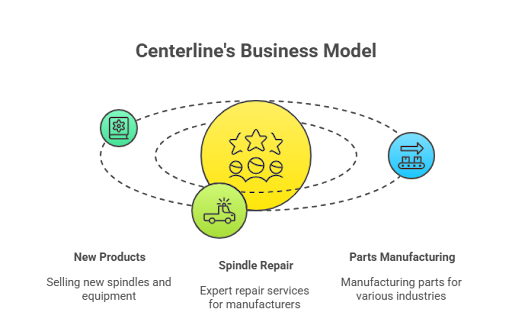
But what we’ve done over the years due to his contacts and his years in Germany, we have several different companies that we represent here in the States as far as new parts that we sell. So that is actually one of our legs. I like to think that Cernerline has three different legs, like we’re a little tripod, if you will. One of them, again, new products as far as spindles goes. The second part is our bread and butter is what we do mainly and what we’re known for, and that is our spindle repair.
and then the third part that we have that we kind of have acquired over the years, is that we manufacture parts as well. Now, we kind of started off with that for just the spin repair side for ourselves. So we were able to. Manufacture parts that were no longer being produced by, the manufacturer of the said spindle or said machine. so it kind of evolved, ⁓ during COVID,
Katherine (03:24)
Mm-hmm.
Bye.
Martin Engster (03:37)
that we kind of started expanding just because I mean, was troubles were, or times were hard for everybody. So, and we were too, you know, I mean, if, if production or if, yeah, if the industry is down, that means machines aren’t spinning and machines aren’t spinning or manufacturing parts, then obviously they’re not going to break down as much. And if they don’t break down as much, that means we’re not repairing as much. So, so we kind of started looking into what are the avenues did we have that we could,
Katherine (03:43)
Yeah, yeah.
Hey.
Martin Engster (04:05)
Yeah, keep the lights on and keep going, you know. So with that being said, we had a couple of companies that needed some parts or needed some, yeah, needed some items manufactured. And since we’ve already had our, all the things that we had to start off with for ourselves, we were able to offer assistance to companies here locally, ⁓ specifically in the oil industry.
Katherine (04:20)
Yeah.
Right.
Martin Engster (04:31)
I mean, we live here in Oklahoma, which is kind of, you know, the hub of it all, if you will. ⁓ So yeah, that’s kind how we, kind of started getting into manufacturing parts more so for other people, not just ourselves. So that’s our, our three parts.
Katherine (04:35)
Yeah.
Very cool.
Very cool. What core values does drive centerline culture? How do these values shape your day to day ⁓ and shop for and even client relationships?
Martin Engster (04:59)
Well, again, I think it goes back to us being, I mean, we’re German, so we’re very prideful, especially when it comes to our products or what we send out the door. definitely value, yeah, mean, our pride of what we send out and what our customers get is very important to us. ⁓ You know, if I were to send out…
Katherine (05:18)
Bye.
Martin Engster (05:24)
bad products or bad items or whatever else, then that’s just, you know, it just looks bad on yourself. So that’s kind of one of our main thing. mean, even, and this is kind of how we got foothold into the manufacturing part was a lot of the parts that the oil industry buys. They had a lot of, they were buying them from, from Asia, which, you know, I mean, there’s a lot of things that you can’t beat as far as that goes. mean, price, quantity,
Katherine (05:29)
right?
Bye.
Martin Engster (05:53)
time, you know, and you can get them pretty quick and right then they’re, you know, they’re pretty Johnny on the spot. So we started talking to our friends in that at the company and we’re like, well, you know, give us a chance. Let’s take a look at it. We might not be able to make as many or as quickly or as cheap as them. However, I know that my parts will definitely fit. And so as far as
Katherine (05:59)
Yeah.
Wait.
Martin Engster (06:19)
You know, they were, they were buying these parts and using them. This is again for the oil industry. Um, their, their tolerances were so high or whatever else, you know, just as long as it fit together somehow a little bit, then it was good to go. Uh, however, they were getting about 20 % that was just throwaway products or one part wouldn’t fit to the other part or, know, I mean, we’re just talking about simple threads and whatnot. And yeah, they were like, well, we’re having issues with this, this and that. And the other were like, okay, well, let’s give it a go. And, and.
Katherine (06:35)
Right.
Right.
Martin Engster (06:49)
I mean, we’ve had, I think two instances and that was just due to programming. So that was our fault. And, you know, we, we, we fessed up to it. And again, it goes back to that pride thing, you know, it’s like, okay, we know that it was our mistake on our end or whatever else. And we were able to remedy this situation rather quickly. And that was that. So then we were back, you know, back on, on the good side and
Katherine (06:56)
Yeah.
Yeah.
Martin Engster (07:15)
We kept cranking out parts for these companies. So it was good.
Katherine (07:19)
Amazing, From your vantage point, what are your top challenges for manufacturers that they’re facing today, whether it’s workforce, supply chain, or even technology adaptation?
Martin Engster (07:32)
I think
it’s a combination of all three. I mean, right now we’re really faced, especially with when comes to manufacturing, when you’re still using the CNC machines, we’re up against 3D printing. We definitely have a lot more waste product, I guess. I can’t think of the word, what I’m trying to say, but we do in comparison to 3D printing when you can just make the part as is, you know, or as complex sometimes, complexity of parts.
Katherine (07:43)
Yeah.
Yeah.
Martin Engster (08:01)
you can’t do with CNC machines, know, that you can crank out with 3D printing. So I think that is definitely one of our big challenges. mean, however, I do have to say I’ve gone to several different machine tool shows. One specific one that we go to every year in Chicago is LabDays. It’s the dental industry. And I remember three years ago, to give the bigger picture, I’m going to go over three years.
Katherine (08:04)
Right.
Mm-hmm.
Martin Engster (08:29)
Three years ago I went it was a lot of tabletop desktop small Machines for making parts or whatever else that they would actually use the small spindles for Which was great and I would say two-thirds of it were those Spindle used and one-third was the 3d printed The year after I went back and it was
It was flip-flopped. mean, and I would even go to say that it was even more, would probably be like three fourths of them were 3D printed. And, me and my colleague were sitting there walking around. were just, I mean, we’re mind blown how much it was being used. And it was, I mean, literally every three booths wise was these, these 3D printed, tabletop units versus the old spindle standstill whatnot. So it was, it was.
Katherine (08:57)
Bye.
Martin Engster (09:17)
pretty impressive ⁓ how it just switched so dramatically so quickly. And then I went to it again this year and this was back in March and it went backwards again. So we’re back to two thirds. But again, you went from three quarters was the 3D printing to I would say two thirds was switched back again to the CNC stuff. it was, it was, so that’s one of the big ones. Labor.
Katherine (09:18)
Mm-hmm.
Yeah.
Yeah.
Martin Engster (09:44)
Labor is, I think that has been, I don’t know if it’s a generational thing or whatnot, but I mean, I’ve seen it a lot. I have a son who’s 22 years old and, will be 22. And he’s definitely a kid that doesn’t mind getting his hands dirty. He’s doing really well here. He’s starting here at the company, third generation, by the way. So, so we’re pretty proud of him. But he’s doing really well, but I see that a lot of his.
Katherine (10:03)
Amazing.
Awesome!
Martin Engster (10:13)
friends or a lot in that generation or whatever, just, I almost want to say that they don’t want to get their hands dirty. It’s strange to see or yeah, the work ethic isn’t quite there. We’ve had several of them, they’ve gone through the same program as my son and all of sudden in the middle of the day, I kid you not, he just got up and walked home.
Katherine (10:22)
Yeah.
Martin Engster (10:40)
And we’re like sitting here going, what just happened here? You know, where’d you go? What are you doing? And that was it. Never saw him again. So it was kind of, I definitely think that is part of the problem as well. We just don’t have the, that generation that, you know, gets in and gets it done. Yeah. I think those are the two, the two big ones that we’re, that we’re facing. That’s, that’s, yeah, it’s going to be challenging for sure over the years.
Katherine (10:42)
Yeah.
Right.
Martin Engster (11:04)
Technology wise goes it goes back to you know, 3d printing versus the the old-school CNC lathes or whatnots
Katherine (11:10)
Yeah. Okay.
How has Centerline adapted to meet new challenges when delivering this, like this on the same quality, speed and innovation?
Martin Engster (11:21)
Well, it’s like I said, I mean, over COVID instead of, I have to say a lot of, if you want to call them competitors, I mean, they do the same thing, you know, I mean, we’re very niche in what we do. There’s really truly not a whole lot of companies like us. mean, personally, like to think there’s no company like us, you know, we’re one of the very few family owned,
Katherine (11:28)
Yeah.
hehe
Martin Engster (11:45)
and we’re, I mean, as far as family owned goes for sure, we’re probably one of the largest. And that’s only just because, you know, we’ve, we’ve seen some things coming and you kind of try to make sure that you mitigate those problems or the things that you foresee as becoming problems as soon as possible. Going back to the COVID era.
Katherine (11:50)
Bye.
Yeah.
Martin Engster (12:11)
Nobody saw that coming at all. However, as we started seeing things develop and everything else, we used the money that was given to us by the government or whatever else in smart ways. We were able to keep all of our employees. Again, but that goes back to the employment. There’s not a whole lot of fish in the sea that…
do this kind of work. the guys that you do have, you definitely try to make sure that you take care of them because I mean, it’s it is definitely a relationship where they help you but you’re helping them as well. You it is definitely you scratch my back, I scratch your back. So we I mean, all the guys here and ladies that we’re we’re family, you know, I mean, we do stuff together, we hang out, we, you know, we’re a family. So it
Katherine (12:31)
Yeah.
Yeah, absolutely.
Yeah.
Martin Engster (12:58)
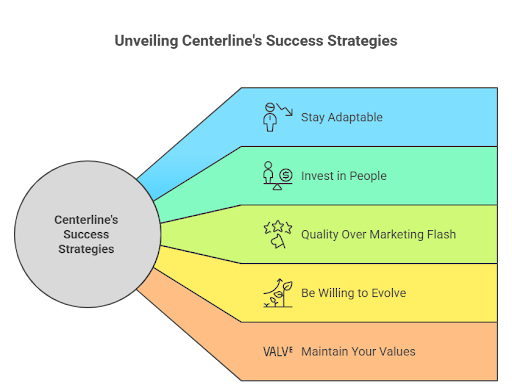
Yeah, back to the COVID question, back to the development question or questions, problems. COVID, we saw it coming. So we had to make sure that we had some type of change so that we were willing to make those changes, willing to change and well evolve, I guess, in a sense, to the problems and make sure that we stay competitive. So, and that’s what we did. We actually kind of almost grew.
Katherine (13:12)
Bye.
Sure, for sure. Very cool.
Martin Engster (13:25)
during COVID versus going down the rabbit hole and fizzling out. Thank you.
Katherine (13:28)
Which is amazing. Yeah, which is amazing.
Technology continues to reshape manufacturing. Where do you see your biggest opportunities in automation or processes in the next two to three years?
Martin Engster (13:43)
geez. I don’t know. I honestly don’t know. The 3D printing thing is just really, yeah. I don’t know where we’re gonna go with that. We’ve been looking into some of the different machines. We have a gentleman here who has one at home who does manufacture a couple of parts.
Katherine (13:55)
I ain’t.
Martin Engster (14:04)
But we really haven’t really tackled that yet. So what we’re trying to do, honestly, is trying to be competitive as far as our parts manufacturing. I mean, I get quotes on my desk that me and my father that we work through probably daily. So we try to stay pretty competitive when it comes to the pricing for that, as well as the lead time. I mean, we try to get it out pretty quick. And my brother does a
Katherine (14:08)
Mm-hmm.
Yeah.
Yeah.
Martin Engster (14:30)
phenomenal job that he definitely gets the material and gets our machines going and keeps our guys cranking all the stuff out. Yeah, correct. And the best part is on a timely manner. So that way our customers are not upset with us. So, and every once in a while we get a hot plate thrown at us. So then it’s like, okay, now we got to redo everything just to make sure that we stay on top of it and everything. And my brother is, yeah, he’s…
Katherine (14:39)
Happy. Yeah, yeah.
Yes, yes. Yeah, for sure.
Martin Engster (15:00)
He’s daggum good, that’s for sure.
Katherine (15:02)
Good, that’s good. How does Centerline typically connect with new customers? Is it primarily through referrals and your reputation management, or did you explore digital marketing channels?
Martin Engster (15:15)
yeah, we’ve explored just about everything. and we use, we try to use every one of those avenues, that we can, majority of them definitely would have to be word of mouth. I mean, that’s, that’s, you know, how it goes. ⁓ you get one half. Yep. Absolutely. You get one happy customer and you know, they tell at least three people, you get a bad customer. mean, obviously they tell 10 people. ⁓ so it goes back to that quality of work, you know, that we try to definitely make sure that.
Katherine (15:26)
It’s cold. It’s cold.
Yep.
Martin Engster (15:40)
We keep making sure that we’re up there. We’ve also started implementing a lot more as far as digital stuff goes. So we’re back on social medias and stuff like that. and I’ve seen a little bit come through there. The one I didn’t quite expect to see as much good from is LinkedIn. I think that sometimes is really kind of one of those, I don’t know.
Katherine (15:54)
Yeah.
Yeah.
Martin Engster (16:04)
I definitely forgot about it. I definitely don’t use it as much as other people do and I get a lot of spam from it. Don’t get me wrong on that part. mean, the spam is just another avenue for somebody to get those spam calls into you. Right, exactly. But there’s also been some good ones out of that too. I mean, a lot of discovery, people reach out. I think that’s been really good for us. I mean, our sales crew, they definitely…
Katherine (16:09)
Hmm. Yep.
Reach out.
Yeah.
Martin Engster (16:28)
They do a good job, you know, doing the old fashioned cold calls and all that stuff. But usually the cold calls have some meat behind it. So we’re not just going to call or we’re not just calling some random Joe’s from off the street. They usually have a customer refer them to us. Hey, give this guy a call. You know, you might know him or you might be able to use a friend of mine, give him, you know, stuff like that. So.
Katherine (16:41)
Mm-hmm.
Yeah.
Martin Engster (16:57)
referrals from customers of ours as well. But then our website, website’s been doing okay. We get several different reach outs from them, whether it’s via phone call or email, but we usually have something coming through the website as well.
Katherine (17:11)
Very cool, very cool. The manufacturing sector hasn’t always been quick to embrace digital marketing. What has your experience, well, you just touched on it in regards to manufacturing and digital marketing, but how do you see other manufacturers touching the space as well in terms of how are they embracing digital marketing as well?
Martin Engster (17:32)
yeah, I see a lot. There’s, certain companies or certain competitors that we, know, that we’re up against or whatnot that do a lot of it. but I hate throwing people under the bus or whatnot, but it gets frustrating sometimes when you see the way that they do it. ⁓ it’s, boy.
Katherine (17:40)
Yeah.
Yeah.
Martin Engster (17:53)
Manufacturing world, feel like, and this is just opinion, so I hope I don’t offend anybody here, but it’s very much a ⁓ man-driven world. A lot of guys out there, the old guys, in the Marine Corps, we always called the new guys the shower shoes, and the older ones, we called them the salty dogs. ⁓
Katherine (17:58)
Mm-hmm.
Yeah.
You
Yeah.
Martin Engster (18:14)
The salty ones, they’re the ones that they’re usually males. So you go to these machine tool shows or whatever else. And one of the big lures, I want to say always to the booths or whatever else is always attractive women. And you’re sitting there going, okay, what does this have to do with what you’re trying to sell me? So I always get so frustrated when I see that kind of stuff, just because it has nothing to do with one another. However, you get these salty boys out there, you know, they’re like, oh, hey, this is where I can.
Katherine (18:32)
Yeah
⁓ Yeah, yeah.
Martin Engster (18:42)
You’re just sitting there going, my God.
mean, so, and, the digital now back to your question with the digital stuff, you’ve got the same scenario going on on that end. You know, ⁓ you put a pretty face on it and all of a sudden these old guys listen to it, you know, and, and, we, yeah. The, the, the, what is the proof is in the pudding, right? So,
Katherine (19:04)
Yeah.
Martin Engster (19:05)
Comparatively speaking, we do a lot of repairs, fixing other people’s stuff. I would probably say that ⁓ a percentage of it. Correct. Correct. So I would definitely say that there is a high percentage of work that we do due to the fact that it wasn’t done right the first time. ⁓ Even from big manufacturers. Yeah, I don’t want to name companies, but…
Katherine (19:09)
Yeah, so less flash, more quality. Yes, yeah.
Yeah.
Martin Engster (19:30)
We’re talking about multi-billion dollar companies and we see work that was done by other people and it’s just, it’s subpar at best. you know, getting them in with a pretty face is one thing, but taking care of the customer and making sure that, and exactly doing the work that there’s, there’s a huge difference there. So, you know, and again, I don’t want to offend anybody by any of the things I said, but it’s just, proof is in the pudding.
Katherine (19:40)
Yeah.
and doing the work, yeah.
Exactly, exactly. If you can imagine strengthening one part of your business like development pipeline, whether it’s awareness, engagement, conversion or retention, what would you choose and why?
Martin Engster (20:12)
boy.
Let’s those options one more time.
Katherine (20:17)
Yeah,
so it’s either awareness, retention, a new customer pipeline, or conversions.
Martin Engster (20:26)
I mean it’s it’s it’s
combination of all of them. My gosh. mean, it’s, it’s, yeah. I mean, I mean, every single one of those has their own, their own points that, that, you know, that are issues and need to be resolved or needed. That’s a tough one to answer. If there’s one to choose from.
Katherine (20:34)
Yeah.
Martin Engster (20:53)
I don’t think retention is one of them for us. ⁓ Yeah. Well, we definitely try to, but the problem is too, where the retention aspect is with all the things going on in our society right now, or in our industry specific, the president, the election, COVID, we haven’t had a good solid year of just.
Katherine (20:55)
Based on what you told me, think you’re pretty good in the retention department.
Yeah.
Martin Engster (21:18)
let’s do our work and everything else. know, everything has been like up down, up down, because everybody’s afraid of spending money or keep the machines going. So we’re constantly trying to figure all that stuff out. But at the end of the day, I keep questioning all of that because at the end of the day, all of us use these products on a daily basis. So how can you slow it down? You know, I mean, at the end of the day,
Katherine (21:20)
Right.
Yeah.
Right, right.
Martin Engster (21:43)
Time doesn’t stop for anybody. doesn’t stop for me. It doesn’t stop for you. It doesn’t stop for anybody. So pretending like it does and backpedaling like, wait, no, we can’t do this right now because we don’t know what the president’s going to do. No matter what the president does or no matter who the president is, the world keeps spinning. We got to keep going. So why do we keep having these, these, you know, these loopholes or these pauses and breaks? It makes no sense. Um,
Katherine (21:46)
No.
exactly right.
Martin Engster (22:11)
And it’s frustrating for, you know, small businesses. mean, we’re a small business and we’ve managed to make things work and to keep the lights on. I cannot count the amount of customers that we have. This is the retention question that have that are no longer around because they couldn’t survive. Correct. Yeah, absolutely. Because, you know, these are family businesses. A small company is a family business. Some guy that had a dream.
Katherine (22:16)
Bye.
Yeah. Yeah, it’s sad to see too. Yeah, yeah.
Martin Engster (22:41)
and it says, you know what, I can do this and I can make this work. And then at the end of the day, it’s like this giant problem comes and then they’re sitting there going, well, okay, there’s a problem. Or the worst of all, which is the biggest problem here in the United States, I think is you have these large companies that you all of sudden get an email from them and says, hey, guess what? We’re gonna change our payment to net 90 prox. So we’re gonna kind of pay you in about 90 days, but you know, whatever.
Katherine (22:50)
Are we?
Yeah.
Martin Engster (23:08)
And then you as a small business, you’re playing bank, right? We’re playing bank because we have to buy products too. And we’ve got net 30 with them. So now I’ve got 30 days to pay my vendor. However, the customer that I’m trying to service, he’s going to pay me in 90 some days, which means I have to play bank for 60 days or more. You know, and these large companies that, I mean, if you ask me, General Motors, Ford, ⁓
Katherine (23:10)
Bye, I’m not.
Yeah.
Yeah.
you
Martin Engster (23:36)
Boeing, whatever, know, the multi-billion dollar company. You can’t tell me that they can’t pay a $1,500 bill for a spindle that they bought or a $10,000 spindle repair or whatever, you know? I mean, it’s absolutely, it’s almost grotesque how it’s handled, you know? And we’re just supposed to take it. And if we say no, then guess what? They go somewhere else.
Katherine (23:37)
Bye.
Right.
Wait.
You
exactly. Yeah. Yeah. ⁓
Martin Engster (24:04)
So what choice
is a small business do you really have? And I guarantee you that there’s plenty of companies that have closed doors because of exactly that reason.
Katherine (24:14)
Make sense, make sense. As Centerline grows, how do you maintain precision, discipline, and innovation that defines your work?
Martin Engster (24:24)
Well, as Sireline grows, you have to make sure that you have the right people. And I think that is your biggest part, your people. Attention to detail, making sure that it gets done right the first time. It all comes down to the people. Again, this goes back to the family that I have here. They are, in my opinion, some of the best technicians, mechanics, CNC operators. Every single one of the guys that we have here
Katherine (24:29)
Yeah.
Martin Engster (24:46)
Definitely they carry their load and then some. They work as a team to help each other out. know, again, going back to my son being here now, being the new blood here. I mean, it’s great to see how they help him along, how they, you know, if he has questions, if he has issues or whatever else, there’s always someone else there, a senior or a guy that’s been here a bit longer, that’s handled that situation before and, you know, helps out.
Katherine (24:56)
Yeah.
Martin Engster (25:13)
So I think that’s how we’re gonna keep doing it. We gotta make sure that we take our guys and treat them good and they definitely treat us good. So we’re proud to have them here.
Katherine (25:17)
Sure.
Amazing.
Can you share a specific project or customer win that helps highlight what Central Line’s ability to do under pressure?
Martin Engster (25:33)
I’m under pressure. Yeah, mean, yeah, a good new story. mean, again, going back to even our manufacturing, we just had our oil industry company here, local company called us up on Thursday. They asked us about some parts that they needed for, they needed out in the field ASAP. So we got the drawings in.
Katherine (25:35)
Or in general, if you have a good news story, that would be great.
Yeah.
Martin Engster (25:57)
pretty quickly on Thursday afternoon. My father and I, took a look at everything. Dad put the quote together and whatnot. I, of course, sent it right away in, I think by Friday morning, as soon as I walked in the door, I had the paperwork right laying on my desk. So we, you know, got the ball rolling. We got the parts coming in, the actual raw steels coming in on Saturday and Tuesday. So we should be.
Katherine (26:18)
Yeah, amazing.
Martin Engster (26:22)
up and done by Wednesday afternoon. So that way they’re able to get that stuff back into the field and keep the pipeline running or flowing, I guess.
Katherine (26:31)
Yeah.
Looking ahead, what’s on the horizon for Sun Airlines? What new capabilities or markets or strategies are you most excited for?
Martin Engster (26:40)
Well, we have been working on a project for a while for our taper grinding. We built the machine specifically here in house. our CNC, back to our parts guys in the back that they started kind of designing a machine. I also had my godfather in Germany, he’s got a large manufacturing company over there. We were kind of putting our heads together and started, you
Katherine (26:48)
Mm-hmm.
Yeah.
Martin Engster (27:08)
designing a product for it. We had a couple of different versions. The first couple of versions over in Germany, they didn’t quite pan out. They were a little bit too heavy. So we were able to kind of redesign it, make it smaller, make it little bit more nimble. It all fits on a little cart. And I mean, that’s drive everything. We can put it in the back of our small little van, our travel van.
Katherine (27:19)
Okay.
⁓ cool!
Martin Engster (27:37)
And we’ve really been trying to get that going. I know that beginning of this week or next, you know, not this week, we’ve got a three day project. We’re going to be out of town. Actually our taper grinding guys are going to be out of town. one of my sales guys, as well as my machinist in the back, he’s actually going to take the machine and we’re going to go do some taper grinding, make sure that those spindles keep on spinning and keep the customer happy. So as quick as possible.
Katherine (27:48)
Yeah.
Sounds good.
Martin Engster (28:01)
Which is good. You know, it’s, yeah, it’s
Katherine (28:01)
Sounds good. Yeah.
Martin Engster (28:03)
kind of, we’re trying to make it our fourth leg. So that way we have something else again, to help us out. it’s not, I mean, it’s not going to break the bank or anything like that, or, get us rich by any means. However, it’s definitely a quick way for a customer who’s making bad parts for us to go in and help them out so that way they can keep turning and keep making their parts. Yeah.
Katherine (28:06)
Yeah.
Bye.
Sounds cool. Sounds cool.
Martin, thank you so much for joining us today and giving us some insights into Centerline’s approach in the manufacturing world. Great insights and amazing story. Thank you so much. And thanks to everybody for being here and for everyone listening. We’ll see you on the next episode of Growth Challenges for Manufacturers.
Martin Engster (28:29)
Absolutely. Thanks for having me.
Thanks so much.
In today’s volatile manufacturing landscape, success often comes down to adaptability, precision, and the ability to deliver under pressure. Few companies embody these qualities better than Centerline Inc., a family-owned business that has built its reputation on engineering expertise and unwavering commitment to quality over three decades.
More Podcasts
Standing Out in a Competitive Market: How AT Sensors is Navigating the AI Era
November 3, 2025 18:23
Watch Podcast →
From Online to Everywhere: How Obvi Scaled from D2C to 20,000 Retail Doors
November 3, 2025 16:05
Watch Podcast →
How Assett Transforms Female Founders Through Strategic Branding
November 3, 2025 14:48
Watch Podcast →