
Contact US

GEO vs SEO: How Generative Engine Optimization Is Redefining Search Visibility
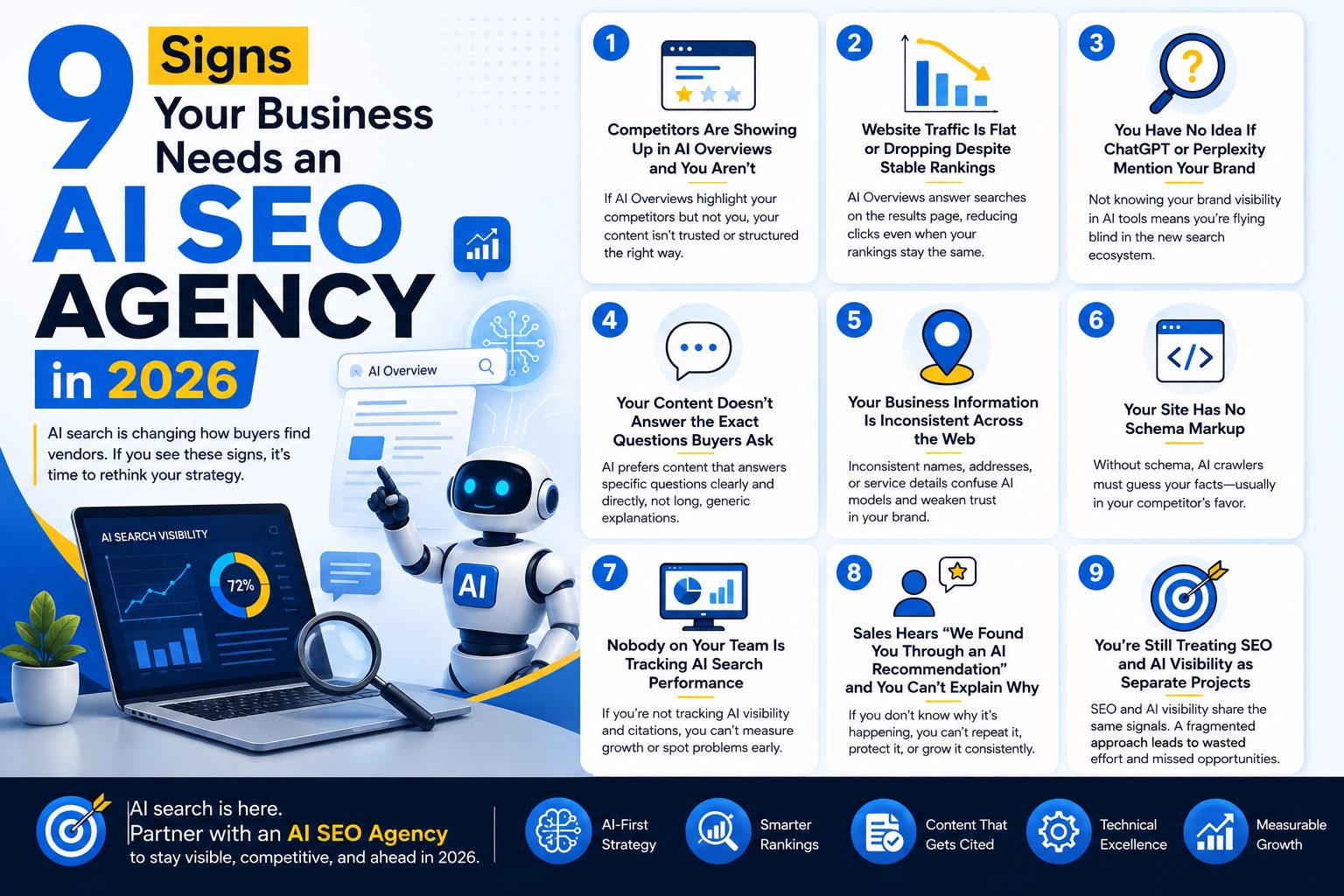
Search visibility is entering a decisive phase. Traditional ranking signals are no longer the only gatekeepers of visibility, as AI-powered engines generate answers rather than lists of links. Brands that rely solely on classic optimization methods face shrinking exposure, while competitors optimized for AI-driven systems gain influence at scale. The shift toward generative search has made adaptation urgent rather than optional.
As AI platforms interpret, summarize, and recommend information across industries, visibility now depends on how content is structured, understood, and referenced by machines. This evolution has introduced Generative Engine Optimization as a critical layer of modern search strategy, changing how SEO services are planned, measured, and executed.
Understanding the Difference Between GEO and SEO
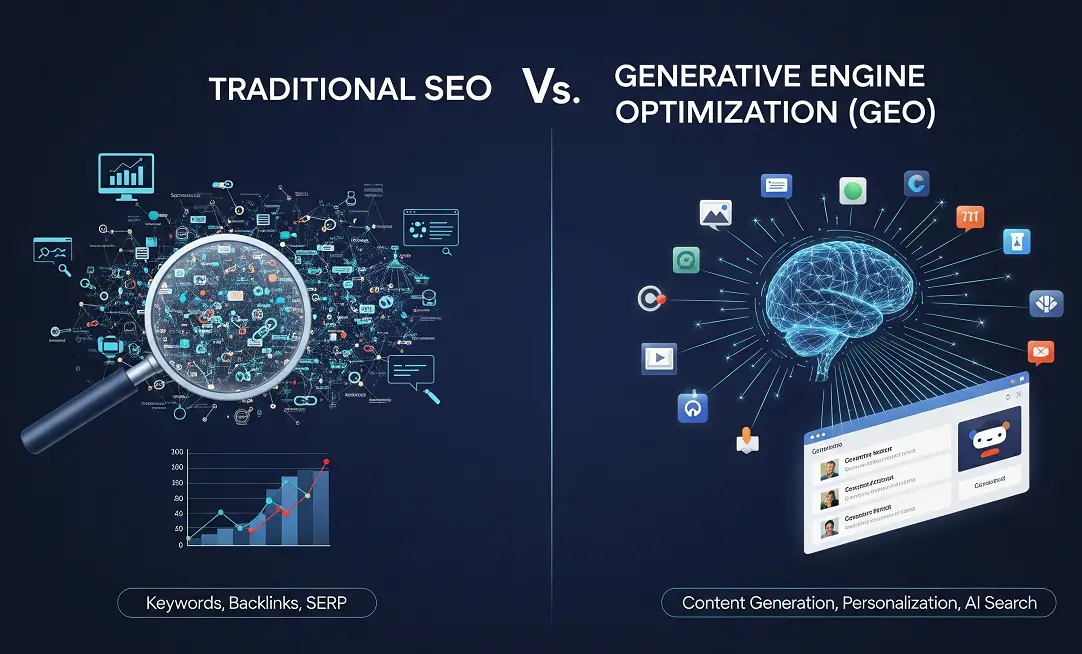
SEO services focus on optimizing websites for traditional search engines by improving crawlability, relevance, authority, and technical performance. GEO services focus on optimizing content so it can be correctly interpreted, summarized, and cited by AI-driven systems such as large language models and answer engines.
While SEO targets rankings, GEO targets representation. Both approaches serve visibility goals, but they operate on different mechanisms. Modern search performance now depends on how effectively both strategies work together.
Why SEO Alone Is No Longer Enough
Search engines increasingly integrate AI-generated answers directly into results pages. These answers draw on multiple sources, reducing reliance on traditional rankings alone. Even well-ranked pages can lose visibility if content is not structured for AI interpretation.
SEO services still provide the foundation through technical optimization, content relevance, internal linking, and authority building. However, without GEO principles, valuable content risks being misunderstood, ignored, or inaccurately represented by AI systems.
What Generative Engine Optimization Actually Solves
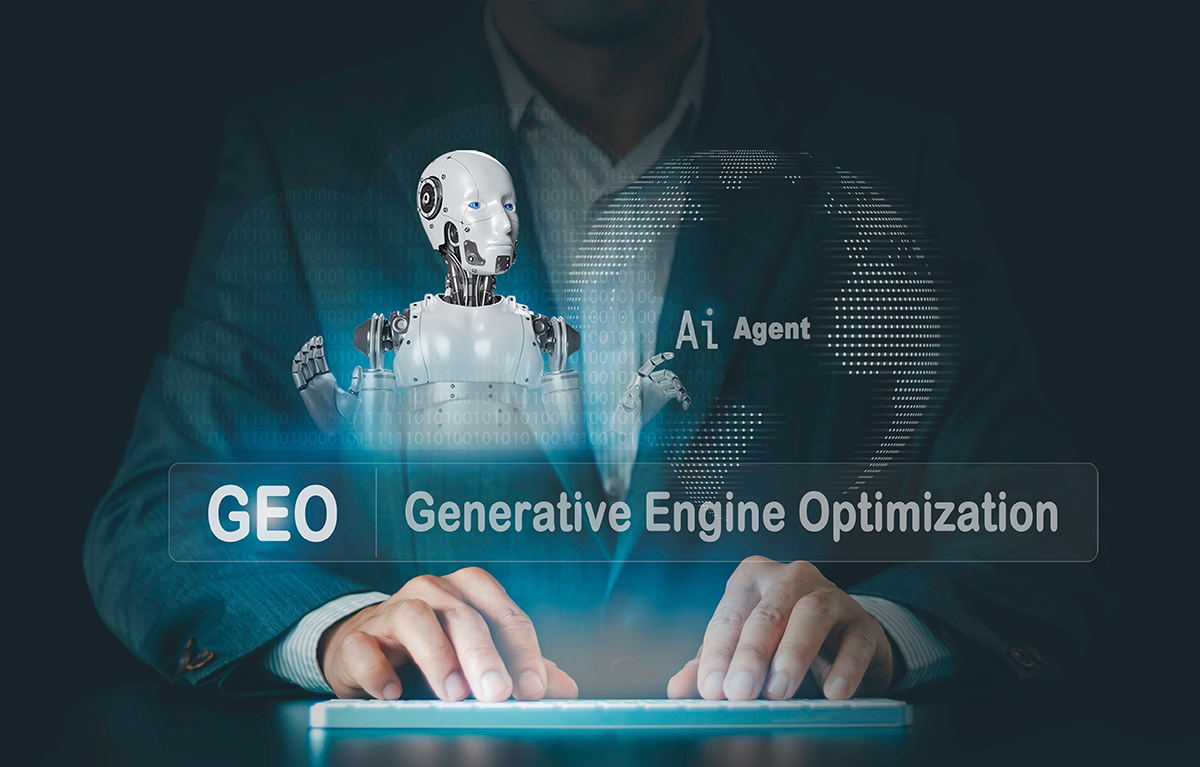
GEO addresses how AI systems process information. Generative models rely on patterns, context, entities, and content clarity rather than solely on classic ranking signals. GEO ensures that content:
- Communicates clear topical intent
- Uses structured formats that AI systems can interpret
- Reinforces entity relationships and brand authority
- Reduces ambiguity in language and context
- Aligns with how AI models summarize and present answers
These optimizations directly influence how brands appear in AI-generated responses across platforms.
SEO Builds Authority While GEO Shapes Interpretation
SEO services strengthen authority through backlinks, technical health, content depth, and keyword alignment. GEO shapes how that authority is interpreted once AI systems reference the content.
Without strong SEO, GEO lacks credibility. Without GEO, SEO content may fail to appear accurately in AI-generated results. Visibility now depends on both ranking performance and interpretive clarity.
This balance explains why technical SEO, content optimization, and AI-focused structuring must operate as a single strategy rather than separate initiatives.
Entity Optimization and Context Control
AI engines rely heavily on entity recognition to understand brands, services, and relationships. GEO emphasizes consistent entity signals across pages, blogs, service descriptions, and supporting content.
Internal linking plays a central role by reinforcing topical clusters and guiding AI systems toward authoritative sources within the site. Phrases related to AI SEO services, SEO services, technical SEO, and search visibility help unify signals across content assets.
This structure reduces the risk of misinformation and improves the accuracy of AI-generated summaries.
How GEO Impacts Content Strategy
Content written solely for keywords often lacks the clarity AI systems require. GEO-focused content prioritizes:
- Clear headings and logical flow
- Explicit definitions and explanations
- Reduced ambiguity in phrasing
- Consistent terminology across pages
- Supporting context through internal links
This approach improves how AI engines summarize, quote, and reference content, extending visibility beyond traditional search results.
Measuring Success in GEO vs SEO
SEO success is measured through rankings, traffic, and conversions. The presence of AI-generated answers measures GEO success, the accuracy of representation, and consistency across AI platforms.
Both metrics matter. Brands focused solely on traditional KPIs may overlook visibility losses within AI-driven search experiences. Integrating GEO ensures visibility is protected across evolving discovery channels.
Why SEO and GEO Must Work Together
SEO establishes trust. GEO ensures that trust is translated correctly by AI systems. Separating the two creates gaps in visibility and message control.
A unified strategy combines:
- SEO services for authority and performance
- Technical SEO for crawlability and structure
- AI SEO services for interpretation and representation
- Internal linking strategies to reinforce topical clarity
Together, these elements support visibility across search engines, AI platforms, and future discovery systems.
How MacRAE’S Aligns SEO and GEO for Modern Search
MacRAE’S delivers integrated SEO services and AI-focused optimization strategies designed to support both traditional search performance and generative visibility. By aligning technical SEO, structured content, entity optimization, and internal linking, MacRAE’S helps brands maintain control over how information is indexed, interpreted, and presented by AI-driven systems.
This approach ensures that content remains accurate, authoritative, and visible across evolving search environments while supporting long-term growth.
Prepare for the Future of Search With MacRAE’S
Search visibility no longer depends solely on rankings. As AI-driven engines reshape discovery, brands must combine strong SEO foundations with Generative Engine Optimization to maintain influence and accuracy across platforms.
Contact us today to strengthen SEO performance, implement GEO strategies, and secure visibility across both traditional search engines and AI-powered answer systems.