- Home
- Services
Explore Our Other Services
Browse our full range of services to find the perfect solution for your needs.
Driven by Values, Focused on Your Growth
MacRAE’S founder, Hugh Owen, recognized early the rise of AI and digital acceleration. His vision defines MacRAE’S as a future-ready growth partner.
Explore Our Other Services
Browse our full range of services to find the perfect solution for your needs.
Driven by Values, Focused on Your Growth
MacRAE’S founder, Hugh Owen, recognized early the rise of AI and digital acceleration. His vision defines MacRAE’S as a future-ready growth partner.
Explore Our Other Services
Browse our full range of services to find the perfect solution for your needs.
Driven by Values, Focused on Your Growth
MacRAE’S founder, Hugh Owen, recognized early the rise of AI and digital acceleration. His vision defines MacRAE’S as a future-ready growth partner.
- AI SEO
Outrank Competitors in AI Search
Reach your audience in AI-generated search results—before your competitors do.
Driven by Values, Focused on Your Growth
MacRAE’S founder, Hugh Owen, recognized early the rise of AI and digital acceleration. His vision defines MacRAE’S as a future-ready growth partner.
Outrank Competitors in AI Search
Reach your audience in AI-generated search results—before your competitors do.
Driven by Values, Focused on Your Growth
MacRAE’S founder, Hugh Owen, recognized early the rise of AI and digital acceleration. His vision defines MacRAE’S as a future-ready growth partner.
Outrank Competitors in AI Search
Reach your audience in AI-generated search results—before your competitors do.
Driven by Values, Focused on Your Growth
MacRAE’S founder, Hugh Owen, recognized early the rise of AI and digital acceleration. His vision defines MacRAE’S as a future-ready growth partner.
- Company



Contact US
How CharterWire Is Redefining Growth in Modern Manufacturing
- Home
- How CharterWire Is Redefining Growth in Modern Manufacturing
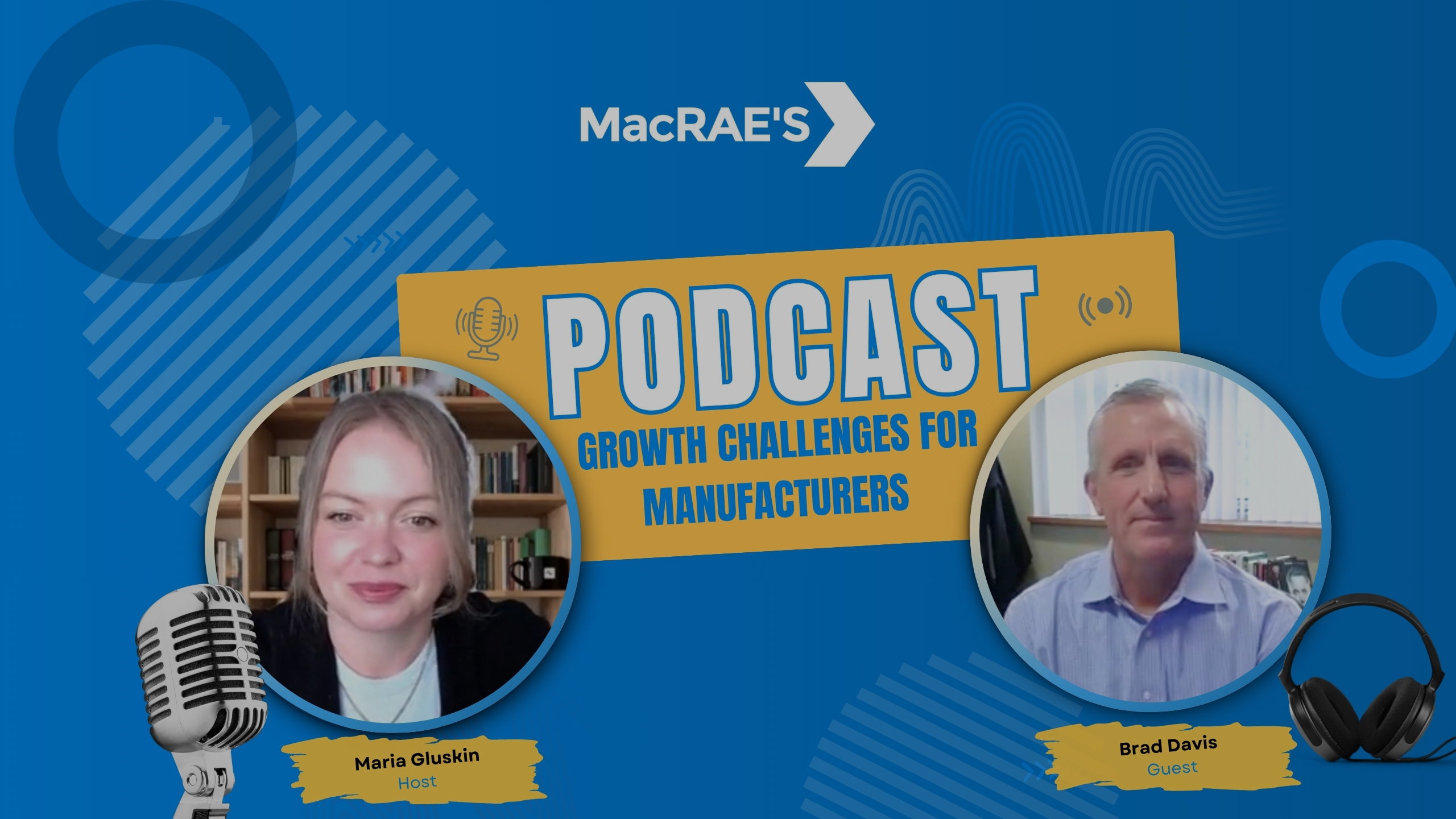

Transcript
MacRAE’S (00:00)
Hi everyone and welcome to MacRAE’S Growth Challenge Podcast, Inside with B2B Manufacturing Leaders, where we uncover their stories, strategies, and solutions to overcoming growth challenges in their industries. I’m your host Maria, and in each episode, we will dive deep with founders, CEOs, and industry experts to explore how they scale, innovate, and lead in today’s competitive landscape. So let’s get started. Today we have Brad from CharterWire. Nice to meet you. How are you today?
Brad Davis (00:29)
Thank you. Thanks for the great topic. It’s an important one to keep manufacturing going in North America.
MacRAE’S (00:36)
Awesome, we’re excited to get started. So, don’t you introduce yourself, your role and charter wire.
Brad Davis (00:42)
I’m the sales and marketing leader at CharterWire. We’re part of charter manufacturing. We’re based in Milwaukee, Wisconsin, and we are a converter of steel. So we have a steel mill. We convert the steel through processes like cold rolling, cold drawing, and cold forming to make steel usable as an input to customers that make parts.
So it’d be in the industrial world, automotive companies, agriculture companies, oil and gas, everything that you would associate with making steel.
MacRAE’S (01:13)
Hey, how long have you guys been around?
Brad Davis (01:15)
It’s a mature industry, know, we’re 90 years. Yep. So many decades and you know, the steel industry has challenges. It’s been a little bit of a decline over the last few decades with our customers making parts overseas. And that’s why it’s important for us. And we’re really rallying around the new efforts on tariffs.
MacRAE’S (01:35)
That’s actually very interesting that you said that because I was curious to know with such an old industry, would say they’ve been around, not old, but they’ve been around for a really long time. ⁓ For lack of better words, sorry. How have customer needs changed in their recent years? Anything from customization, faster turnaround, digital ordering, supply chain transparency.
Brad Davis (01:45)
Yep.
Yeah.
MacRAE’S (01:59)
How has all of this affected your customer needs?
Brad Davis (02:03)
What I see is, mean, our customers are similar to our industry in that they’re very mature. You go through North America, you see these, you know, town to town has these industrial parks, lots of manufacturing, lots of companies doing things the same way for a very long time. So they’re always under cost pressures, you know, do things more efficiently.
So what’s happened is companies have become very efficient at what they do over time. And we’re helping them become more efficient. We’re constantly coming up with ways to help them to reduce their costs or be more efficient and to protect their business and help them grow with their customer base, which would be the end user, the end use economy. really these, what’s happened is in
the industrial world in North America is manufacturing has become very efficient through continuous improvement. And it makes the supply chain very robust to where it’s very solid, to where it’s become very efficient and very difficult to compete against unless you’re making something that’s very much of a commodity. If it’s a commodity product, it’s most likely already moved overseas.
So it’s very difficult supply chain to compete with, but at the same time, it makes it very difficult to grow because what you’ve done is you’ve created a very much of a niche situation for yourself because you’re always looking at doing the same thing better. So you’re great at doing one thing, but it’s difficult to grow. The good thing is it’s
MacRAE’S (03:35)
Yeah.
Brad Davis (03:36)
you know, in these sorts of businesses, there’s not going to be a lot of new entrants because so much of the knowledge base is mature. So it’s, you’re not going to go into an industry and easily break into, companies have been doing this for a very long time, have expertise, have depreciated equipment. So that’s the advantage of it.
MacRAE’S (03:57)
hearing a couple of things. Mature is a fantastic word. Thank you so much, Brad. Yes, mature is a fantastic word. Let’s use that word moving forward. I definitely, you know, that’s such a good point. I didn’t even think about that, that there’s just, yeah, okay, there’s competitors. Yes, you have to compete overseas, but as far as new competitors entering into your space, that’s so rare.
Brad Davis (04:00)
Yeah.
Okay.
Mm-hmm.
Mm-hmm.
MacRAE’S (04:18)
which because
it is a mature industry, you have been around for a really long time for them to try and scale it up to companies that have been around for 90 years, a hundred years, that would be really, really tough. So at least less people coming in, right? Besides competing on price and efficiency, how else can a company like yours stay competitive?
Brad Davis (04:29)
Mm-hmm.
Correct.
The issues are with, ⁓ let’s go back to mature, that knowledge base. And the customer base is needing information very quickly. The reaction time needs to be very fast and robust. we’re trying to get better at speed and responsiveness and making sure that our knowledge is.
is useful in the marketplace. So the technologies that are coming, we’re really looking forward to implementing using digital throughout our sales and marketing process. Just to be able to respond to customers to help our customers grow and to keep that knowledge base to where our customers can use it for their benefit.
MacRAE’S (05:22)
Can you share some of those ⁓ digital platforms or strategies you’ve been using in order to make your response time a lot quicker?
Brad Davis (05:31)
Yeah, I mean, it’s more the typical stuff is like the the chat GPT and the AI is using that more and more is being much more useful. But through we’re in the process of using a CRM and getting more information into the CRM and using the AI tools that they offer is something we’re going to be doing over the next couple of years to be to help us in ways.
across the entire functionality so that our people that we have now can be more interactive with customers and not doing the things that can be done through digital.
MacRAE’S (06:06)
Yeah. How big is your sales and marketing team?
Brad Davis (06:09)
Through new product development, sales, marketing, and customer service, we’re over 20 people. ⁓
MacRAE’S (06:16)
That’s a big team.
And we chatted about this a little bit earlier that the manufacturing really tend to struggle with shifting from traditional sales methods, relationship building, to basically something that is scalable, specifically through digital funnels. Have you been using any type of those methods to try and attract new clientele?
Brad Davis (06:35)
Yeah. Yeah.
Yeah, we’re pretty much of a niche like many of the North American manufacturers have become. And a lot of the sales and marketing efforts that are out there, at least that I see, because people are marketing to me very often, don’t really work. So most marketing methods are not really useful today. So our approach is
where it’s not very helpful to a potential target customer unless you’re bringing information to them that’s helpful, that’s useful. you have to understand the value proposition to your target audience before you approach them so that they see that it’s worthwhile to spending time.
And, you know, in the past, the relationship building, you know, talking about, you know, college football and showing brochures about your company just is not, no one wants to spend that time anymore. And then following up with a phone call is in an email is you’re not going to get responses. So we’re, you know, our approach is much more targeted. It starts with having the over overlying strategy or vision for the business and
We have a resource for strategic marketing that they spend their entire time understanding the marketplace, where we bring value and where we’re differentiated and understand how to connect those to positive customer outcomes. And then they are able to relay that message to specific people who could be who we see as a potential customer.
MacRAE’S (08:16)
How long have you been in your role?
Eight years. Okay. So you have seen things shift and change a lot. I’m curious to know, you did mention that certain marketing things just like don’t work for you because of your niche. I’m so curious to know if there’s one, let’s say marketing strategy that you tried and it turned into a complete marketing nightmare that you had to pivot so fast. Do you have something like that in mind that has happened over the last eight years for you?
Brad Davis (08:45)
Yeah, we have, we’ve had a lot of failures. I think it’s, it’s, what we, what we did is, ⁓ we were trying to win business or we would quote on business. If somebody came to us with, Hey, can you quote on something? And it really wasn’t in our sweet spot. And we’d be competing against somebody who is much more efficient than we are, to produce, to, to suit their needs.
So we’re really wasting their time and we’re, you know, really important as we are wasting our own organization’s time because, you know, the operations team has to look at quotes or run trials or, you know, spend their time working on something that’s really doesn’t make any sense for the customer. So that’s really hurtful to do. I mean, what we do is if you’d like to think about a pipeline,
You know, traditionally you want 10 or 15 X your sales target for your pipeline. You know, we’re more comfortable going to one or two X if it’s stuff that we really feel is in our sweet spot and the customer needs, we can really help them. So it’s, it’s, ⁓ you know, I think that was the biggest lesson. after many failures is to understand where we’re, we’re, we’re offering something that’s more efficient than what the competition is going to offer.
and we have a better chance of helping the customer. So, you know, only spending time on those things and understanding what those are was the lesson.
MacRAE’S (10:03)
It sounds like a lot of effort from your marketing and sales team goes into prospecting and actually triaging potential clients to make sure that they’re actually a really good fit for what is it that you offer, right? Okay.
Brad Davis (10:19)
Yes. Yep. And
it’s really understanding the marketplace. that’s that strategic marketing really know all of your competitors and what they do. And so where you know if you’re going to be more efficient at something and you’re going to bring value. And it’s really not a price situation. And price is important to the customer, but it’s really
having the robust supply chain, having the reliability and making it fit with our operations so we know that we’re going to be able to service them.
MacRAE’S (10:48)
automation comes into play here, right? Especially from the sales and marketing components, so you can get back to people a lot quicker. So, and that goes back into using technology, AI base. That’s one of the greatest things about it is the automation component and how quickly it can scan a large amount of data and then give you the type of answers that you’re looking for,
Brad Davis (10:57)
Mm-hmm.
Yeah, we’re excited about it and we’re starting to use it more. But it’s pretty exciting when you see the potential and the things that are done manually right now. How much of sales and marketing that can be automated is really, really exciting. And then the opportunity to have people who are existing in the business who already know the customers and the products.
you know, they can be spending time doing something that’s value added. So all that time frees up and, and the, the speed, the response time to customers is something I’m really excited.
MacRAE’S (11:41)
That’s
That’s awesome. Actually, my follow up question to you was if all of these tasks are going to be taken over by AI and these automations, what do you think you and your team are now going to spend all that extra time on?
Brad Davis (12:03)
Well, if you just think about some of the things that you spend a lot of time is preparing for meeting with a customer and the customer interaction with the salespeople is the most important meanings that a business has. what could be more important than that? So to prepare for that, if you could have all the information about, if you have all the information of your interactions with the customers through emails and reporting,
And you can help the AI can help you be a partner to create, know, here’s the things you should be talking to your customer about. Also, they could give you information about how is your customer impacted by tariffs. You know, that’s the biggest new thing. What’s happening in the industry your customer is in. All of these things can help a salesperson prepare for a call. Something that would take days could be done by AI. So just, you know, think about that, how helpful that could be.
MacRAE’S (12:59)
Yeah. And it will free up so much time of the person to actually, I guess, focus on the relationship with the person that they’re sitting in front. Because sometimes it could be rush, right? Like trying to get everything together. It could be days of preparation, sometimes even months. Depends on the size of the project, right? Like if it’s a really big project, like weeks, some months, sometimes the sales cycle could take, right?
Brad Davis (13:19)
Yes, yeah, mean, it would save an incredible amount of time and also help you reach out to more people because it takes less time. ⁓
MacRAE’S (13:26)
Yeah. In an
ideal world, now that you’ve seen kind of how sales and marketing started to change with the AI tools, even for a mature industry like yours, do you think there is opportunity for the way that you attract people as opposed to being so outbound? Is there opportunity here for more inbound leads, connections, business opportunities?
Brad Davis (13:49)
Yeah, because a lot of the mature businesses rely on technical expertise. So there’s opportunities to communicate with customers a lot more efficiently with the AI to get information out, to collect more information, to update information as trends change and use that to communicate with their customers, your target customers. So that’s, you know, a lot of the
you know, that information that people have that kind of tribal knowledge exists within the business, you could really, you’re able to reach a lot more people or use that with the AI tools to communicate with customers. that’s that technical resource, having that kind of technical resource aid with you with AI would be really ideal.
MacRAE’S (14:33)
Do find that you in your company, do you guys do a lot of outbound and outreach or are people finding you and coming to you?
Brad Davis (14:44)
⁓ you know, they, come to us, but that’s very rare that it’s, it’s a match for what we do. So it’s, you know, a lot of times we’re pretty specific about, the customers that we’re working with. So it’s, we’re, we’re outbound. but we, again, we’re not, it’s not what you would typically experience with marketing. We’re, ⁓ probably going to get to know you.
and spend time and explain our value proposition different than the blast marketing that a lot of people see.
MacRAE’S (15:12)
long have you been doing that type of method compared to what you were doing before?
Brad Davis (15:17)
well, I’d say, you know, my expertise is kind of in that area with, ⁓ you know, some older companies that I’ve worked with. I’ve kind of learned that that is the approach to take. So, yeah, I’ve been doing it for, you know, over a decade now using that approach. Well, I’ve had to, it takes a while though, within a company to under understand it.
MacRAE’S (15:32)
Yeah, you’re right.
Brad Davis (15:37)
So it’s taken a few years here to be able to hone in that value proposition and that marketing message.
MacRAE’S (15:46)
What was the biggest barrier or challenge launching that type of approach?
Brad Davis (15:52)
Well, it’s the, you know, you want to grow. So I think it’s just discipline of chasing. What you don’t want to do is get into chasing business. Cause then you’re slowing the business down. You’re slowing your team down, trying to do things that again, are not efficient for the customer. just doesn’t make sense for them. And then it,
creates a lot of challenges because the opportunities that you could be working on, you’re not. So that’s, think the biggest challenge has always been, you know, trying to…
Use the data to understand what’s the most efficient way to bring on or to bring on a new customer. That’s, you’re constantly looking at that. Like what projects are you working on? Is it the right amount? Is it not enough? Is it, things flowing through quickly? you, are the customers happy? So we’re always evaluating.
I think that’s the challenge probably with most companies are working on too much of the wrong things, I would suspect.
MacRAE’S (16:45)
If one of your clients was to look for a solution like yours, where do they start?
Do they type in a question in chat GPT? Do they search online? How does the process work where they’re like, I have a problem. I’m going to try to solve it. And then eventually they somehow line up with you. How does that work? What do you solve for them?
Brad Davis (16:51)
Yeah.
Yeah, we’re mostly getting our.
you know, for incoming like that, we’re getting it mostly online. So their customers are, are looking at our website. So they’re probably doing a Google search search. I mean, I’m sure some of them are using chat, TPT now. and then, you know, they’re looking for typically somebody who’s going to be a reliable part of their supply chain. I think with a, you know, high quality.
reliable, they don’t have to worry. We call it, you know, they want worry free steel solution is what they want. That’s what we sell it. And you don’t have to worry about the quality. You don’t have to worry about delivery. You have the service, you have people responsive. So those are the things that people are concerned with as far as the steel industry.
MacRAE’S (17:49)
And let’s say five years from now, how do you see the industry changing and adopting to the new ways that are out there that are getting introduced, whether with digital efforts or automations from your department specifically?
Brad Davis (18:06)
We’re looking for ⁓ two major changes. One is obviously digital. We want to do as many of the manual tasks, do them digitally so we can spend time on value added activities and spending more time with customers and interacting with customers and bringing value to them. The other one is
is actually in manufacturing where it’s more domestic production, more reshoring. to do that is going to be a lot of helping them to support with the domestic supply chain, which we’re gearing up to do. And also with investment in production because we talked about before, a lot of the equipment is maturing.
and a lot of the knowledge base is maturing. So we want to be investing in our business to support the industrial world to bring production back to the United States.
MacRAE’S (19:02)
Yeah, the tariffs must have been, you mentioned that briefly earlier on, but can you share a little bit more how those have affected your space and what are the next steps here?
Brad Davis (19:14)
Yes, a lot of tariff protection is for steel, so steel production. So that helps us as far as, you know, the United States needs to have steel producers for a lot of reasons like national security. So tariffs are necessary in order to keep the steel industry in United States. But the steel industry to support to sell, we need our customers here too.
So I think that’s the next step in what we’re working with on taros as far as lobbying with the government is to say we need protection for, you know, derivative products, parts to be made, parts are made out of steel, need to be protected or maintained here rather than importing everything from China. importing stuff from China is not where we want to be as I think for the country. So that’s why tariffs are important.
MacRAE’S (20:01)
Absolutely.
Brad Davis (20:01)
It’s just making
it, just helping make the trading environment fair.
MacRAE’S (20:06)
Yeah. And Brad, if we, you know, if you had to leave one piece of advice with this changing climate of politics and digital and AI and everything is changing so quickly, what’s like one piece of advice that you can leave to other manufacturers, leaders and how to, you know, stay competitive and continue growing and staying relevant?
Brad Davis (20:28)
Yeah, I’d say as far as growing, know, it’s not easy, but I would say look at your business strategy, making sure you understand how you’re differentiating, you’re communicating the vision to the company. And second is your team, making sure your team is in the right place and you’re using their strengths to…
to help support the growth. And then third is make sure you have a sales process and looking at data and using data to making sure you’re working on the right things and you’re being effective with your sales and marketing team. So you have the strategy, then support it with technology. ⁓
MacRAE’S (21:04)
I love it. Well, thank you so
much, for your time. It was such a pleasure chatting with you today.
Brad Davis (21:09)
Yeah, thanks Maria. Appreciate it.
MacRAE’S (21:11)
Of course you’re welcome. Okay,
In a recent episode of MacRAE’S Growth Challenge Podcast, we sat down with Brad Davis, the sales and marketing leader at CharterWire, a 90-year-old steel converter based in Milwaukee, Wisconsin. What emerged from our conversation was a fascinating look into how mature manufacturing companies are adapting to stay competitive in an era of digital transformation, offshore competition, and changing trade policies.
CharterWire operates in what Brad calls a “mature industry”—one that’s been perfecting its craft for nearly a century. They convert steel through processes like cold rolling, cold drawing, and cold forming, serving customers in automotive, agriculture, oil and gas, and other industrial sectors.
But here’s the paradox Brad identifies: The very efficiency that makes North American manufacturing competitive also makes it difficult to grow.
“Companies have become very efficient at what they do over time,” Brad explains. “We’re constantly coming up with ways to help them reduce their costs or be more efficient. What’s happened is manufacturing has become very efficient through continuous improvement, which makes the supply chain very robust and very difficult to compete against—unless you’re making something that’s very much of a commodity.”
This continuous improvement creates incredibly specialized operations that excel at specific things but struggle to expand beyond their niche. The upside? New competitors face enormous barriers to entry. Established players have depreciated equipment, decades of expertise, and deeply embedded knowledge that can’t be easily replicated.
One of Brad’s most striking observations is about how sales and marketing have fundamentally changed in the manufacturing sector.
“The relationship building—talking about college football and showing brochures about your company—just doesn’t work anymore,” he says. “No one wants to spend that time. Following up with a phone call or an email, you’re not going to get responses.”
Instead, CharterWire has adopted a highly targeted approach that starts with understanding their value proposition before ever reaching out to a prospect. Rather than “blast marketing,” they focus on bringing genuinely useful information to potential customers.
“Most marketing methods are not really useful today,” Brad notes. “Our approach is where it’s not very helpful to a potential target customer unless you’re bringing information to them that’s helpful, that’s useful.”
This shift took Brad over a decade to refine across different companies, and even at CharterWire, it’s taken several years to hone in on the right value proposition and marketing message.
While CharterWire’s outbound approach is highly selective, Brad sees enormous potential in AI and digital tools for transforming how mature manufacturers communicate their technical expertise.
“A lot of mature businesses rely on technical expertise,” he explains. “There are opportunities to communicate with customers a lot more efficiently with AI—to get information out, collect more information, and update information as trends change.”
CharterWire is implementing a CRM system and planning to integrate AI tools over the next couple of years. The goal isn’t to replace their 20-person sales, marketing, and customer service team, but to free them up from tasks that can be automated so they can be more interactive with customers.
“That tribal knowledge that exists within the business—you could really use AI tools to reach a lot more people and communicate with customers,” Brad notes.
Perhaps the biggest challenge Brad identifies in maintaining a focused growth strategy is discipline.
“What you don’t want to do is get into chasing business, because then you’re slowing the business down,” he warns. “You’re trying to do things that are not efficient for the customer—it just doesn’t make sense for them. And then it creates a lot of challenges because the opportunities you could be working on, you’re not.”
The constant evaluation involves asking: What projects are we working on? Is it the right amount? Are things flowing through quickly? Are customers happy?
“The challenge with most companies,” Brad suggests, “is working on too much of the wrong things.”
CharterWire’s growth strategy is also deeply tied to broader economic policy, particularly around tariffs and reshoring.
“The United States needs to have steel producers for a lot of reasons like national security,” Brad explains. “Tariffs are necessary in order to keep the steel industry in the United States. But for the steel industry to sell, we need our customers here too.”
That’s why CharterWire is looking ahead to the next five years with two major strategic focuses:
- Digital transformation to automate manual tasks and spend more time on value-added customer interactions
- Supporting domestic production and reshoring by investing in equipment and capabilities to support the industrial world bringing production back to the United States
The company is actively lobbying for tariff protection not just for steel, but for derivative products—the parts made from steel that their customers produce. “Importing stuff from China is not where we want to be as a country,” Brad states plainly. “Tariffs are just helping make the trading environment fair.”
When potential customers search for CharterWire online—which is how most inbound leads find them—they’re looking for something specific: reliability.
“They’re looking for somebody who’s going to be a reliable part of their supply chain with high quality,” Brad explains. “We call it a worry-free steel solution. You don’t have to worry about quality, delivery, or responsiveness. Those are the things people are concerned with in the steel industry.”
When asked for one piece of advice for manufacturers navigating today’s changing climate of politics, digital transformation, and AI, Brad offered a three-part framework:
- Strategy: Look at your business strategy and make sure you understand how you’re differentiating. Communicate the vision clearly to your company.
- Team: Make sure your team is in the right place and you’re using their strengths to support growth.
- Process and Data: Have a sales process and use data to ensure you’re working on the right things and being effective with your sales and marketing efforts.
“Have the strategy, then support it with technology,” Brad concludes.
CharterWire’s story illustrates a broader truth about mature manufacturing in North America: success isn’t about chasing every opportunity or adopting every new technology. It’s about understanding your unique value proposition, being disciplined about which customers and projects you pursue, and strategically deploying digital tools to amplify your existing expertise rather than replace it.
As manufacturing faces pressure from overseas competition on one side and the promise of AI-driven efficiency on the other, companies like CharterWire are finding their competitive advantage in the same place they always have—deep technical knowledge, reliable execution, and genuine customer service—while using new tools to deliver those strengths more effectively.
The efficiency paradox remains, but for manufacturers willing to be strategic about growth rather than opportunistic, there’s a clear path forward in an industry that’s been perfecting its craft for generations.
More Podcasts
Standing Out in a Competitive Market: How AT Sensors is Navigating the AI Era
November 3, 2025 18:23
Watch Podcast →
From Online to Everywhere: How Obvi Scaled from D2C to 20,000 Retail Doors
November 3, 2025 16:05
Watch Podcast →
How Assett Transforms Female Founders Through Strategic Branding
November 3, 2025 14:48
Watch Podcast →