

Contact US

Why Google Search Rankings and Position Tracking Feels Broken Right Now
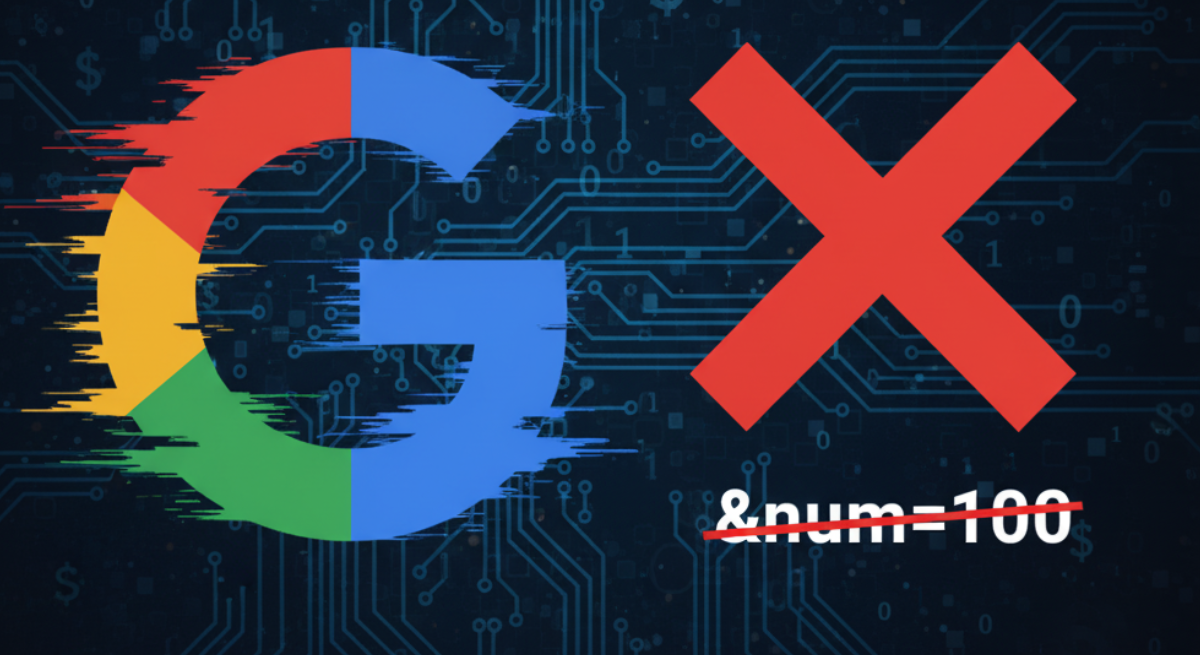
The SEO industry is facing unprecedented disruption as Google has quietly eliminated a fundamental feature that rank tracking tools have relied on for years. Around September 10, 2025, Google disabled the &num=100 URL parameter, creating chaos across the search marketing landscape.
The Technical Breakdown
For years, SEO professionals could append &num=100 to Google search URLs to retrieve 100 results per page instead of the standard 10. This parameter was essential for third-party tracking tools to efficiently gather comprehensive ranking data. Now, what previously required one request demands ten separate queries, multiplying costs by 1000%.
Industry-Wide Disruption
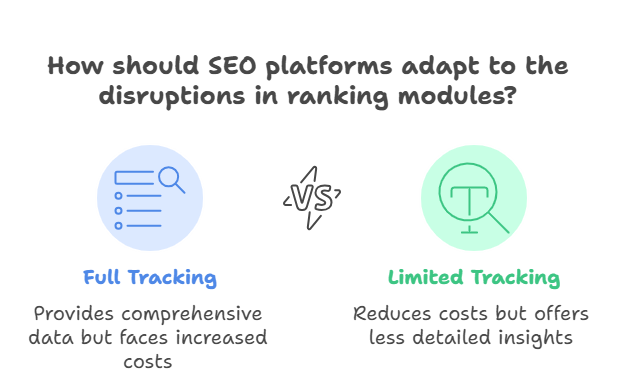
The impact has been swift and severe. Major SEO platforms are experiencing significant disruptions to their ranking modules, facing dramatically increased costs to collect the same data. Many tracking services have announced they will no longer monitor the full 100 search results and will default to tracking only the top 20 positions. Other platforms have implemented temporary solutions but acknowledge that ranking updates will now refresh every 2 days rather than daily.
Beyond Third-Party Tools
The disruption extends beyond rank trackers. Google Search Console data has also appeared inconsistent since the change, with many users reporting significant drops in desktop impressions and corresponding increases in average position. Industry experts suggest this reveals how bot traffic from tracking tools may have artificially inflated impression numbers for years.
The Bigger Picture
Industry observers speculate this move targets aggressive scraping by AI tools and SEO platforms. Many believe that automated tools scraping Google data so aggressively have forced Google to fight back against excessive automated data collection, breaking traditional SEO rank checkers in the process.
What This Means for SEO Professionals
The future of comprehensive rank tracking appears uncertain. Tools can no longer efficiently monitor beyond the first two pages of results, and costs are dramatically increasing. SEO professionals should prepare for more expensive, limited data collection and consider focusing on Google Search Console for primary performance insights.
This marks a fundamental shift in how SEO data will be gathered and analyzed, forcing the industry to adapt to a new reality where deep ranking insights become both scarce and expensive.