

Contact US

Adapting to AI Overviews and Zero-Click Experiences: The Future of SEO
The search landscape has fundamentally shifted. More than half of all searches now end without a single click—and with Google’s AI Overviews rapidly expanding, that number is only climbing. For marketers and SEO professionals, this represents both a challenge and an opportunity. Traditional rankings still matter, but they’re no longer enough to drive meaningful results.
Welcome to the era of zero-click search, where AI curates the answer and your brand either gets cited… or gets skipped entirely.
The New Reality: Search Without Clicks
For years, SEO success was measured by rankings and click-through rates. But today’s search experience is dramatically different. Google’s AI Overviews sit prominently at the top of search results, synthesizing information from multiple sources to deliver instant answers. Users get what they need without ever leaving the search page.
This isn’t a temporary trend—it’s the new normal. And it demands a completely different approach to search visibility.
What AI Overviews Mean for Your Visibility
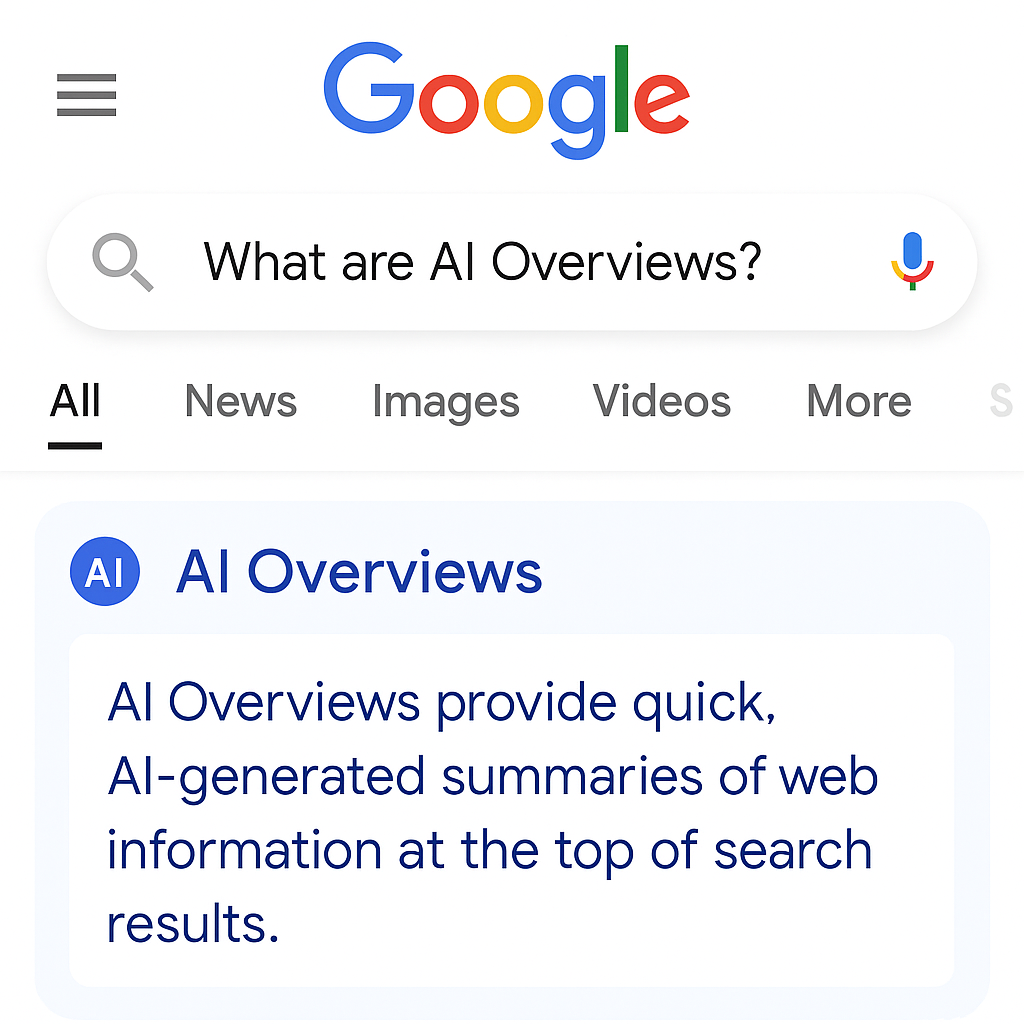
AI Overviews fundamentally change how users interact with search results. Instead of scanning through blue links, searchers receive AI-generated summaries that pull from various sources across the web. Your content might inform these answers, but users may never visit your site.
The implications are significant:
- Traditional metrics become less meaningful. Rankings and organic traffic don’t tell the complete story when users find their answers without clicking.
- Source attribution becomes crucial. Getting cited in an AI Overview can establish authority even without direct traffic.
- Content quality matters more than ever. AI systems favor authoritative, well-structured information from trusted sources.
The question isn’t whether to adapt—it’s how quickly you can evolve your strategy to remain visible and influential in this new environment.
Building Authority Where AI Looks for Answers
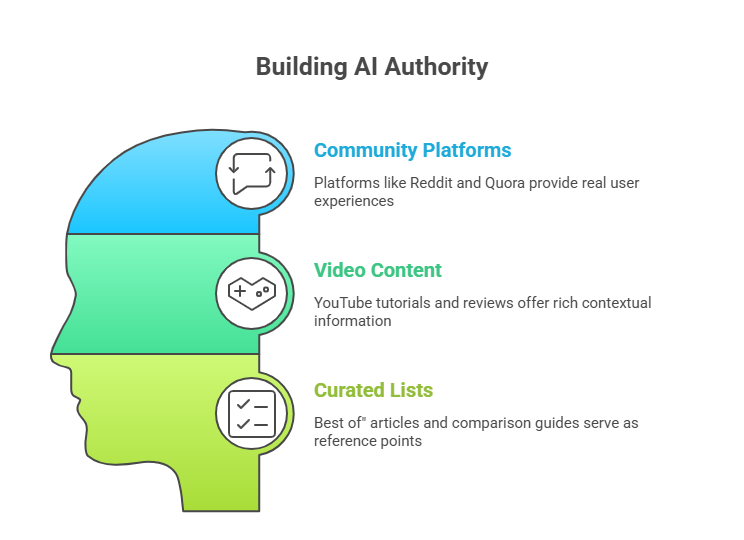
AI doesn’t just pull from traditional web pages. These systems increasingly source information from forums, video content, community discussions, and curated “best of” lists. Your brand needs to be present and authoritative across all these touchpoints.
Diversify Your Content Footprint
To appear in AI-generated responses, your content must exist where AI systems are actively gathering information:
- Community platforms and forums have become goldmine sources for AI. Reddit, Quora, and industry-specific forums provide real user experiences and opinions that AI values. Contributing genuinely helpful answers and insights on these platforms builds the kind of authority that AI systems recognize and reference.
- Video content is increasingly featured in AI responses. YouTube tutorials, product reviews, and explainer videos offer rich, contextual information that complements text-based sources. Creating video content that directly answers common questions positions you as a multimedia authority.
- Curated lists and comparison content serve as go-to resources for AI systems making recommendations. “Best of” articles, comparison guides, and roundups that genuinely evaluate options become reference points for AI-generated suggestions.
Structure Content for AI Comprehension
AI systems parse and understand content differently from human readers. While your content should always prioritize user experience, certain structural elements help AI systems better comprehend and cite your information:
Use clear, descriptive headings that mirror natural language questions. When someone asks “How do I optimize for voice search?” your heading should match that phrasing, not use industry jargon.
Implement schema markup to provide explicit context about your content. FAQ schema, How-To schema, and Product schema give AI systems structured data that’s easier to reference and cite.
Create content that directly answers specific questions with clarity and authority. AI systems favor definitive, well-sourced answers over vague or promotional content.
Tracking Performance in a Zero-Click World
Here’s the uncomfortable truth: Google won’t give you detailed analytics about your presence in AI Overviews. There are no click-through rate reports, no attribution data, and no neat dashboard showing how often your content gets cited.
But that doesn’t mean you’re flying blind.
New Metrics for a New Era
Traditional analytics tools weren’t built for zero-click environments, so you need to expand your measurement strategy:
- Brand mention tracking becomes essential. Monitor when and where your brand appears in AI-generated responses using brand monitoring tools. Track the frequency, context, and prominence of these mentions across different queries.
- Sharing a voice in AI responses helps you understand your competitive position. For key topics in your industry, analyze which brands consistently appear in AI Overviews and how your presence compares.
- Engagement signals beyond clicks provide insight into your influence. Track increases in branded searches, direct traffic, and conversions that can be attributed to enhanced visibility in AI responses, even when users don’t click through from search.
Building a Measurement Framework
Create a systematic approach to tracking your zero-click performance:
Identify your highest-value queries—the searches most important to your business. Regularly audit AI Overviews for these queries to understand who’s being cited and why.
Establish benchmark metrics for your current presence in AI responses. Document which queries feature your brand, how you’re described, and what content gets referenced.
Monitor changes over time as you implement optimization strategies. This longitudinal view helps you understand what works and where to focus your efforts.
Evolving Your Content Strategy
Success in a zero-click world requires rethinking how you create, distribute, and optimize content.
From Traffic to Influence
The goal shifts from maximizing clicks to maximizing presence and authority. Every piece of content should aim to become a citable source that AI systems trust and reference. This means:
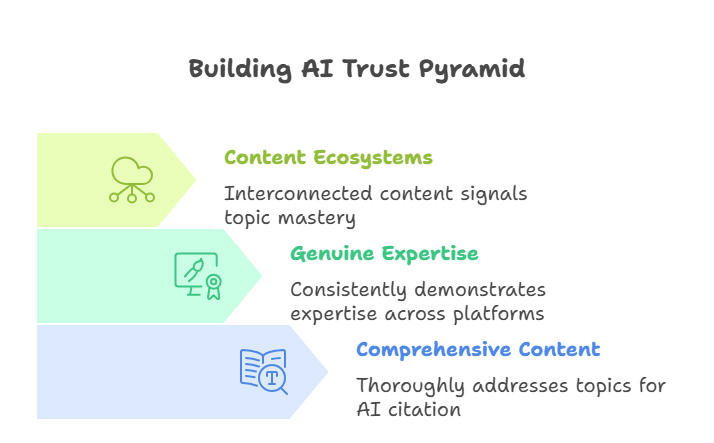
- Investing in comprehensive, authoritative content that thoroughly addresses topics. Surface-level content might rank, but deep, well-researched pieces become the references that AI systems cite.
- Building genuine expertise and demonstrating it consistently. AI systems increasingly favor content from recognized experts and authoritative sources. Developing and showcasing expertise across multiple platforms reinforces your credibility.
- Creating content ecosystems rather than isolated articles. Interconnected content that comprehensively covers a topic area signals expertise and provides AI systems with more context for understanding your authority.
Optimization for Both Humans and AI
Your content needs to serve two audiences: the humans who might read it and the AI systems that will parse and reference it.
For humans, maintain engaging, readable content that provides value. No amount of AI optimization matters if your content doesn’t genuinely help people.
For AI, ensure your content is technically sound, clearly structured, and contextually rich. Use natural language that matches how people ask questions. Provide explicit answers alongside supporting evidence and context.
The sweet spot is content that educates and engages human readers while being perfectly structured for AI comprehension and citation.
Also Read:
What is Search Anywhere Optimization
The Path Forward
The shift to AI Overviews and zero-click search isn’t something that might happen—it’s already here. Brands that adapt their strategies now will establish authority and visibility that compound over time. Those that cling to traditional SEO tactics alone will find themselves increasingly invisible.
This new search landscape rewards brands that:
- Create genuinely valuable, citable content across multiple formats and platforms
- Build authentic authority in their space through consistent expertise and contribution
- Think beyond clicks to measure influence, presence, and brand impact
- Adapt quickly to evolving AI systems and search behaviors
The fundamentals of good SEO haven’t disappeared—they’ve evolved. Quality content, technical excellence, and user focus remain crucial. But now they must be combined with an understanding of how AI systems discover, evaluate, and cite sources.
Take Action Today
Start by auditing your presence in AI Overviews for your most important queries. Where does your brand appear? Where is it absent? Which competitors are being cited and why?
Then, develop a strategy to systematically build your authority where AI systems look for information. This isn’t about gaming the system—it’s about ensuring your genuine expertise is structured and positioned to be discovered and cited.
The future of search is already here, and it’s powered by AI. Your visibility, influence, and ultimate success depend on how quickly and effectively you adapt. The brands that master this transition will thrive in an era where being cited matters as much as—or more than—being clicked.
Ready to dominate the AI-powered search landscape? Visit MacRAE’S to discover how we help businesses build authority, maximize visibility, and succeed in the era of zero-click search. Let’s ensure your brand gets cited, not skipped.