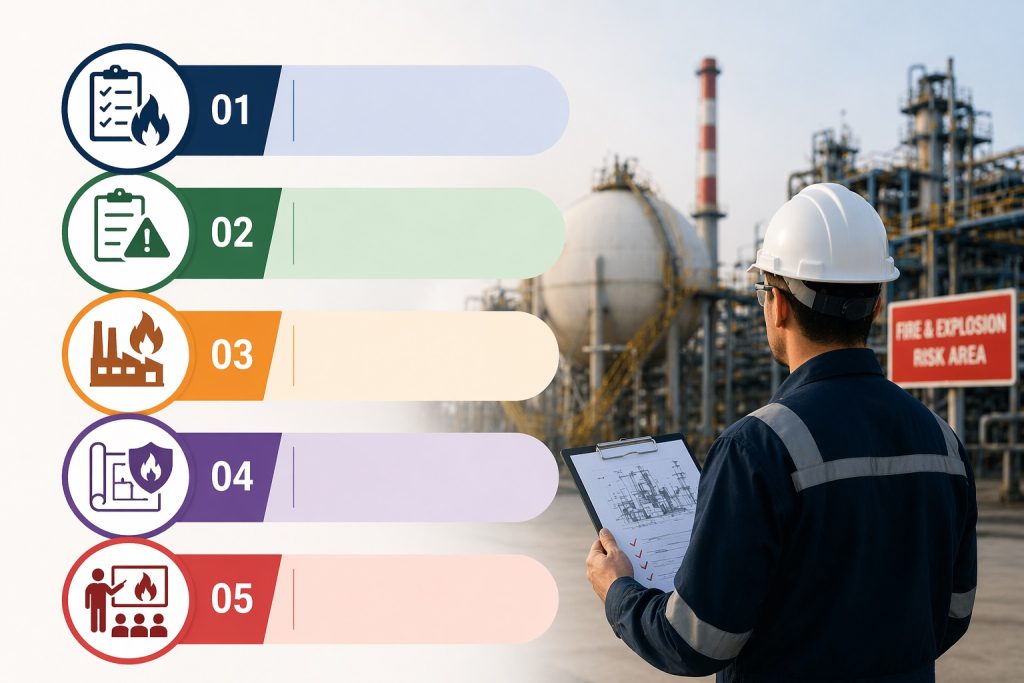

Industrial establishments in Ontario face a range of fire and explosion risks tied to equipment, materials, and process design. These hazards are not limited to emergency scenarios; they are often built into daily operations through the use of flammable liquids, combustible dust, and heat-generating machinery. Managing these risks requires more than procedural planning. It requires technical evaluation and engineering oversight.
While safety plans outline how to respond to emergencies, they do not always evaluate whether hazards are being controlled effectively. Fire and explosion consultants focus on prevention by assessing how risks are created and how they can be mitigated through system design and layout planning.
This is where fire and explosion consultants play a critical role. A qualified fire protection consultant helps ensure that fire hazards are identified, controlled, and documented in accordance with regulatory expectations.
Risk Assessment for Flammable Liquids and Processes
One of the primary responsibilities of a fire protection consultant is evaluating how flammable liquids are stored, handled, and used within a facility. These assessments examine containment systems, separation distances, and potential ignition sources.
Processes that involve coatings, cleaning agents, or fuel-based materials require careful review. The consultant identifies conditions in which vapours could accumulate or handling practices may increase fire risk.
By working with fire safety advisors, consultants ensure that both engineering controls and operational procedures are aligned to reduce the likelihood of ignition.
Review of Explosion-Prone Systems and Layouts
Certain industrial processes create conditions where explosion hazards must be considered. Dust collection systems, enclosed processing equipment, and confined spaces can all contribute to the buildup of combustible materials.
Fire and explosion consultants evaluate these systems to determine whether containment, venting, and system design are appropriate. They also assess the equipment layout to ensure that pressure-release or containment measures function as intended.
These reviews are essential for identifying risks that are not always visible during routine inspections but can have significant consequences if left unaddressed.
Coordination with PHSRs and Engineering Reviews
Fire and explosion risks often intersect with other regulatory requirements, particularly when new equipment is installed or existing systems are modified. In these situations, coordination between engineering reviews and fire risk assessments is necessary.
A fire protection consultant works alongside engineers to ensure that fire hazards are considered as part of broader compliance activities. This coordination helps confirm that safety controls are integrated into equipment design and layout.
Working with fire safety advisors, consultants also ensure that findings are reflected in operational procedures and emergency planning.
Compliance with Applicable Fire and Structural Standards
Industrial facilities must comply with multiple standards governing fire risk, structural integrity, and hazard control. Fire and explosion consultants interpret these requirements and apply them to specific facility conditions.
This includes evaluating how fire protection systems interact with building structures, equipment layouts, and storage practices. Ensuring compliance with applicable standards helps facilities avoid regulatory issues and maintain safe operating conditions.
The involvement of a qualified fire protection consultant assures that technical requirements are properly addressed.
Documentation and Ongoing Inspection Support
Effective fire risk management depends on accurate documentation. Consultants prepare reports that outline identified hazards, recommended controls, and compliance status.
These documents support inspection readiness by providing evidence that risks have been assessed and addressed. Fire safety advisors may use this information to update safety procedures and ensure that emergency plans reflect current conditions.
Ongoing inspections and periodic reviews help ensure that systems remain effective as operations evolve.
Engineering Input Is Essential for Fire Risk Control
Fire and explosion risks in industrial establishments require more than administrative controls. They demand technical evaluation and coordination between engineering, operational, and compliance functions.
By working with fire and explosion consultants, supported by fire safety advisors, facilities can identify hazards early and implement effective controls.
SAFE Engineering Inc. supports Ontario industrial establishments through engineering-driven services that strengthen fire risk management and overall safety compliance. For more details, contact us today!